
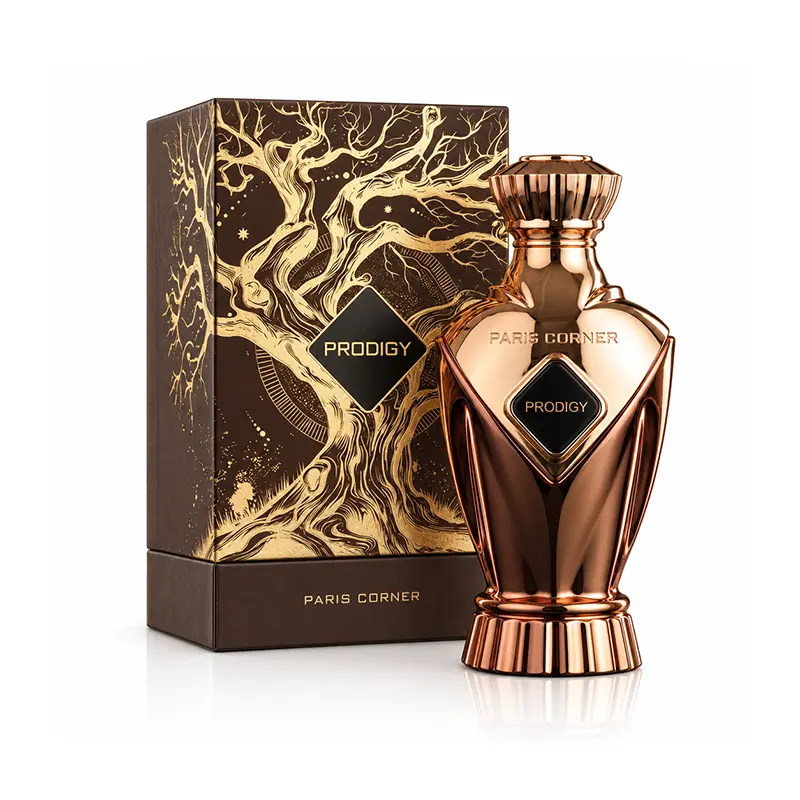
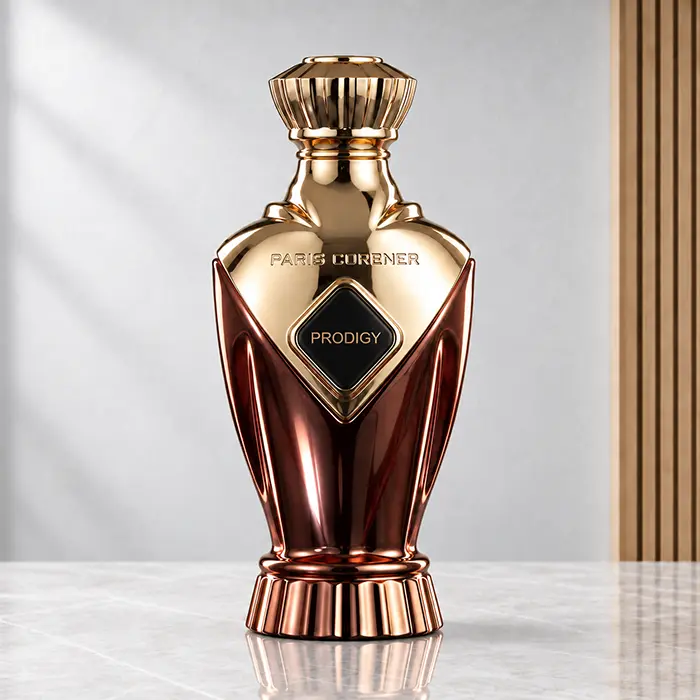
Paris Corner Prodigy is a unisex Eau de Parfum with bright fruit, warm spice and a soft woody dry-down. See more
Paris Corner Prodigy is a unisex Eau de Parfum built around contrast. It opens brightly, moves through a floral-aromatic heart and settles into a warm, smooth sweet-woody base. Its interest comes from the way a lively beginning acquires warmth, softness and character.
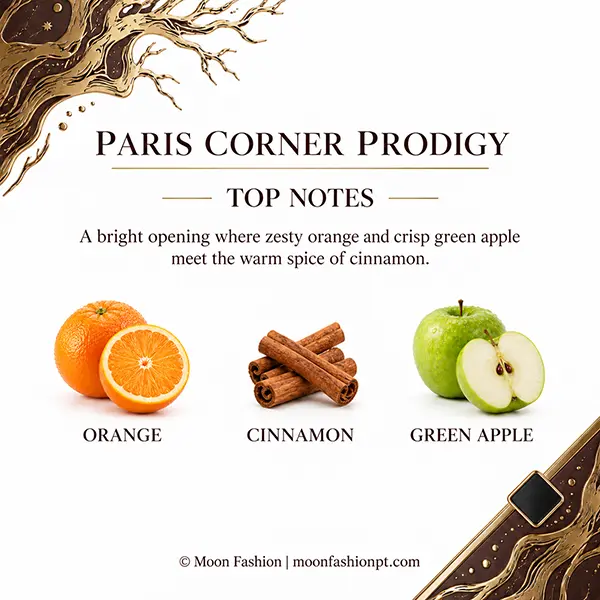
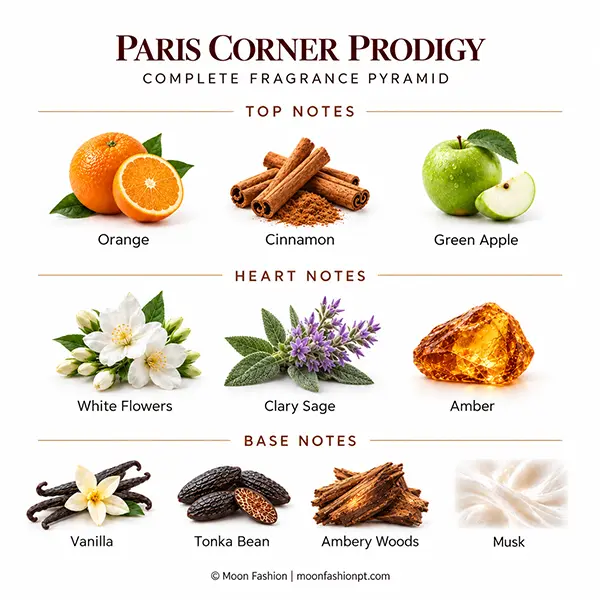
The impression is best understood as a meeting point between vivid fruit and warm spice. Orange gives the opening its luminous citrus-fruit lift, while green apple adds a crisp, juicy edge. Cinnamon then introduces a darker, warmer line, so the start has more shape than a straightforward fresh accord. The central expectation to keep in mind is simple: Prodigy opens brightly, but it is designed to move towards warmth.
Paris Corner Europe product description
Prodigy unfolds with the zest of orange, the warmth of cinnamon, and the crispness of green apple.
The opening is likely to communicate fruit before the softer base becomes important. Orange can read as clear and radiant, while green apple gives the fruit a sharper, cleaner impression. Cinnamon changes the atmosphere around them: instead of leaving the fruit entirely cool or watery, it adds a warm accent that may feel more noticeable as the first spray settles.
Those three notes should not be treated as a stopwatch-like sequence in which one disappears before the next begins. They describe the opening direction. A wearer may notice orange and apple together, with cinnamon providing the contrast behind them. On one skin, the opening may feel more citrus-led; on another, the spice may give the fruit a fuller, warmer outline.
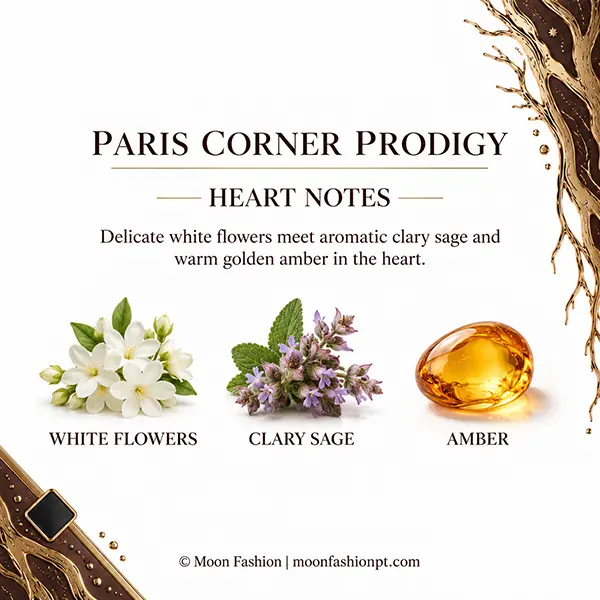
When the opening begins to settle, white flowers, clary sage and amber take the composition in a more rounded direction. The white-floral facet can soften the fruit and spice, clary sage brings an aromatic herbal contrast, and amber adds warmth to the centre. This middle stage is the bridge between Prodigy's lively beginning and its smoother base.
Clary sage gives the heart an aromatic line that stops the white flowers and amber from blending into an indistinct softness. It can create a herbal freshness alongside the floral element, while amber supplies a warmer, more enveloping tone. The point is not that every wearer will identify clary sage as a separate dominant note; its value is the contrast it introduces inside the heart.
This relationship also explains why the fragrance can feel more composed after the initial fruit has quietened. The floral aspect supplies smoothness, the aromatic aspect adds definition, and amber prepares the move towards vanilla, tonka bean, woods and musk. The heart therefore acts as a transition rather than a pause between two unrelated parts.
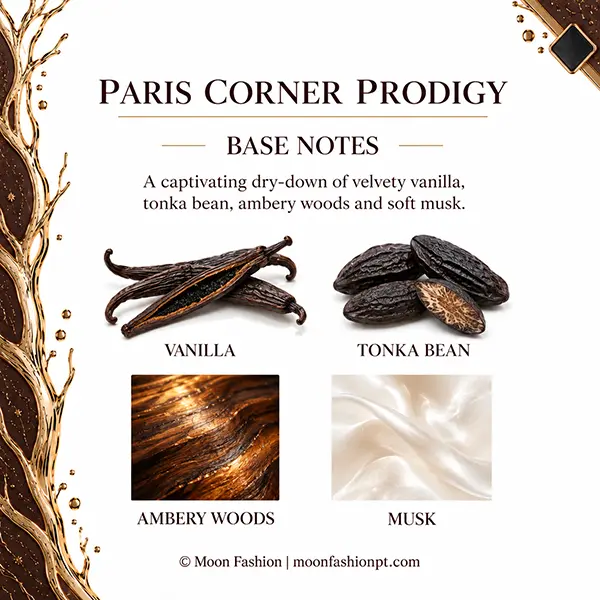
The late direction is shaped by vanilla, tonka bean, ambery woods and musk. Vanilla and tonka bean bring softness and gentle sweetness; ambery woods add structure and a drier warmth; musk helps the whole dry-down feel more continuous. The base is therefore not simply a sugary finish. It is a balance between creamy sweetness, ambered warmth, wood and a smooth musky texture.
It contains all three directions, with the official base placing them together rather than asking the buyer to choose only one. Vanilla is the clearest route to softness, tonka bean rounds out the sweetness, and ambery woods give the finish a more structured frame. Musk supports the transition and can make the dry-down feel less angular.
For someone who enjoys very dry woods, the vanilla and tonka bean may make the fragrance feel softer than expected. For someone who normally avoids sweet scents, the ambery woods may provide enough structure to make sampling worthwhile. The safest expectation is a warm, sweet-woody base with musk, not a purely fresh or austere ending.
The word “dry-down” refers to the fragrance as it develops, not to a guaranteed time on skin. Skin chemistry, clothing, application and surroundings can change the balance that a wearer notices. The note structure helps set expectations about character; it cannot promise an identical result for every person.
Looking at the notes separately misses the most useful product-specific idea. Orange and green apple create lift, cinnamon gives that lift warmth, white flowers and clary sage reshape the middle, and amber connects the centre with the sweeter woods below. The fragrance becomes easier to understand when its movement is considered as one line: bright fruit, warm aromatic heart, then soft ambered woods.
The official structure places orange and green apple in the opening, so the fruit-led impression belongs mainly to the first stage. As the fragrance develops, the heart and base introduce floral, aromatic, ambered, vanilla, tonka, woody and musky facets. A sense of brightness may remain in the overall impression, but the direction becomes warmer and more rounded rather than staying like a simple fruit spray.
This distinction matters when shopping online. A buyer who wants a crisp green-apple scent throughout may find the later stages too warm or soft. A buyer who likes fruit as an introduction to a deeper profile may appreciate the change. Read the complete pyramid before deciding, particularly if your preference is strongly tied to one type of opening.
Paris Corner Prodigy may suit people who like a bright first impression but want a warmer finish than a purely citrus or green fragrance usually suggests. Its unisex positioning leaves the decision with the note balance rather than a traditional gender category. The relevant question is whether this progression matches your usual taste.
These are preference cues, not promises about how the fragrance will smell on every person. The same note relationship can appear brighter on one wearer and warmer on another. A sample is particularly useful when your tolerance for cinnamon, sweetness or musk is limited.
Some fragrance decisions are easy because the first spray already resembles the buyer's preferred style. Prodigy deserves a more complete check if you like the opening but are unsure about vanilla, tonka bean, ambered woods or musk. Smell it at the opening and again after it has settled, then decide whether both parts belong in your routine.
Start by noting your first reaction to the fruit and cinnamon. Do you find the orange and green apple bright, or does the warm spice change the opening more than you expected? Next, give the heart time to develop and check whether the white flowers, clary sage and amber make the transition smoother for you. Finally, consider the base on its own terms rather than judging it only against the opening.
A useful test is to write down three short impressions: opening, settled heart and late character. This keeps one vivid first-spray note from dominating the whole decision. If you enjoy the complete route, the 100 ml size may fit a regular fragrance wardrobe. If you only like one stage, sampling first is the more sensible choice.
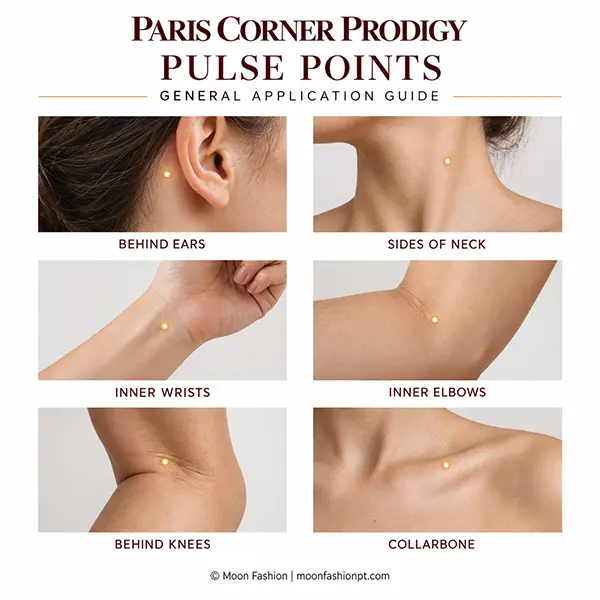
Do not use a single test to predict a fixed number of hours or a universal projection level. Those results depend on the wearer and the setting. The practical purpose of sampling here is to understand the relationship between fruit, spice, floral-aromatic warmth and the sweet woody base.
The note balance gives Prodigy several possible use contexts without requiring a rigid occasion label. The bright opening can feel approachable at the start of the day, while the warm heart and base give the fragrance more presence as it develops. Whether it feels right for an office, a social setting or personal daily wear depends on your application and tolerance for sweetness and spice, not on an automatic occasion guarantee.
The orange and green apple provide lift, but cinnamon, amber, vanilla, tonka bean, ambery woods and musk move the fragrance towards warmth. That combination can make the profile worth considering beyond the conditions in which a purely crisp citrus scent is usually chosen. It does not mean that one season is objectively correct; it means the composition includes both an energetic opening and a warmer structure.
In milder conditions, the fruit may be the first element that draws attention. In cooler surroundings, the spicy, ambered and woody facets may feel more central to the experience. If you are deciding for a specific setting, test the fragrance in a similar environment and use a restrained application until you know how the balance works for you.
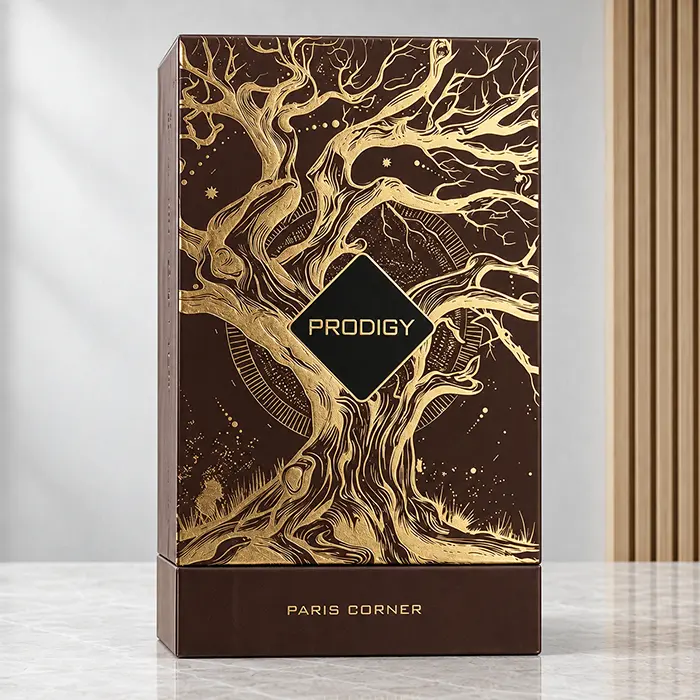
Online perfume shopping is easier when the product identity and selected option are checked together. Look for the exact name Paris Corner Prodigy, the designation Eau de Parfum and the active 100 ml format. The official note structure should match the three stages shown above. These checks help distinguish the intended item from a similarly named fragrance or a different size.
A product name, note pyramid and volume identify the shopping choice, but a single visual detail should not be treated as an authenticity certificate. Keep the purchase information available if you need to contact the retailer about the selected option.
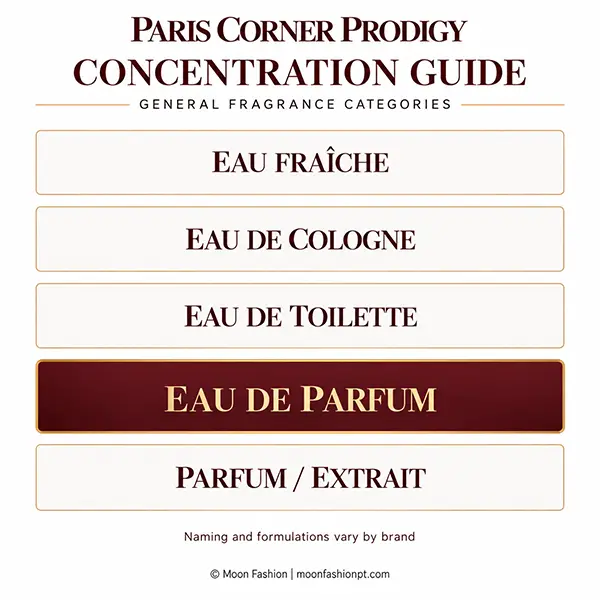
It identifies the fragrance format, but it does not guarantee a fixed number of hours, a universal sillage level or identical projection for every wearer. Concentration names are useful product information; they are not a substitute for a product-specific wear test. If performance is your main concern, assess Prodigy on your own skin and in the setting where you plan to use it.
The note structure can still help with expectation-setting. Fruit and spice describe the opening direction, the floral-aromatic and amber heart describes the central transition, and vanilla, tonka, woods and musk describe the later character. That is more reliable for understanding style than attaching an unsupported numerical promise to the bottle.
It means the fragrance is presented for anyone who enjoys its scent profile. The useful decision is therefore based on the movement from orange and green apple to cinnamon, the floral-aromatic heart and the soft sweet-woody base. A traditional men’s or women’s category cannot tell you whether you will enjoy that specific contrast.
This can be helpful when choosing for a shared fragrance wardrobe or a gift, but it does not remove the need to consider personal taste. Someone who enjoys crisp fruit but dislikes vanilla may react differently from someone who looks for warmth, tonka bean and ambered woods. The same product name and unisex orientation can suit both shoppers only when the underlying note balance is attractive to them.
Use the label as an invitation to evaluate the composition openly, not as a promise that it will smell identical on every wearer. If the recipient’s preferences are unknown, the safest route is to focus on the clearly stated fruit, spice, floral, amber, vanilla and woody directions and, where possible, test before committing to the 100 ml size.
In practical terms, the unisex label widens the group of people who can consider the fragrance, while the note progression supplies the real selection criteria. That keeps the purchase focused on scent preference rather than a category shortcut.
Moon Fashion has physical shops in Portugal, but Paris Corner Prodigy and a tester are not guaranteed at every location. If you are planning a product-specific visit, contact the shop before travelling and consult the Moon Fashion shop-location guide for current store details.
Paris Corner Prodigy is most clearly understood as a bright-fruity opening carried towards a warm, soft and ambery-woody finish.
If that movement matches your taste, use the complete note progression to choose the format that suits your routine. If you are unsure about the transition from crisp fruit to sweet woods, sample first and judge the fragrance after it has settled.
| Specifications | Descriptions |
|---|---|
| Brand | Paris Corner |





.jpg)