


.jpg)

When a fruity perfume needs more than sweetness
The appeal of Zimaya Rabab Blue Eau de Parfum is easier to judge when you look beyond the turquoise bottle. Its manufacturer’s composition brings a fresh, bergamot-led idea into contact with amber, then places flowers beside candied fruit before a base of vetiver, sandalwood, cedarwood and vanilla.
That is a more layered proposition than “a sweet fruity perfume”. There is brightness to consider, but also an early suggestion of warmth; there is sweetness, but a floral middle and a woody foundation give you other reasons to pay attention. This page covers the 100ml Eau de Parfum.
The key buying question is whether you enjoy fruit-like sweetness with flowers and woods, rather than sweetness on its own. If that combination interests you, the useful details are how those directions connect, which expectations the blue presentation might create, and what wearer feedback can reasonably tell you.
Read the composition as three connected moments
The stages below keep the manufacturer’s Top, Mid and Base structure. They are a way to understand the fragrance, not a stopwatch: impressions can overlap, and the order of the note names does not tell you their proportions.
At the opening: freshness already has a warmer companion
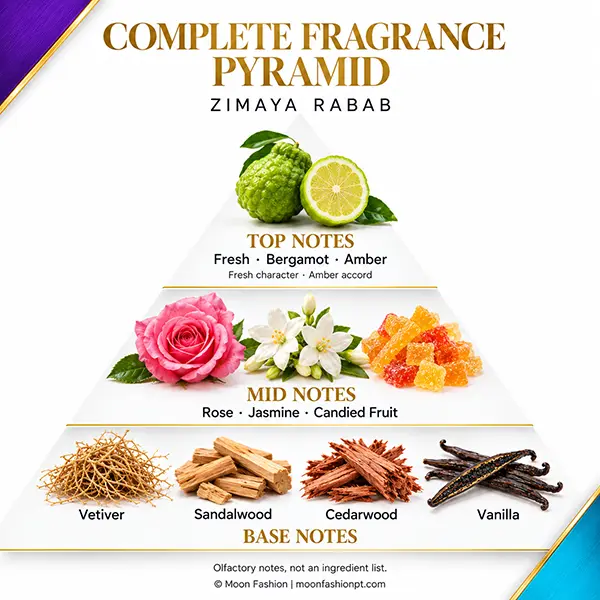
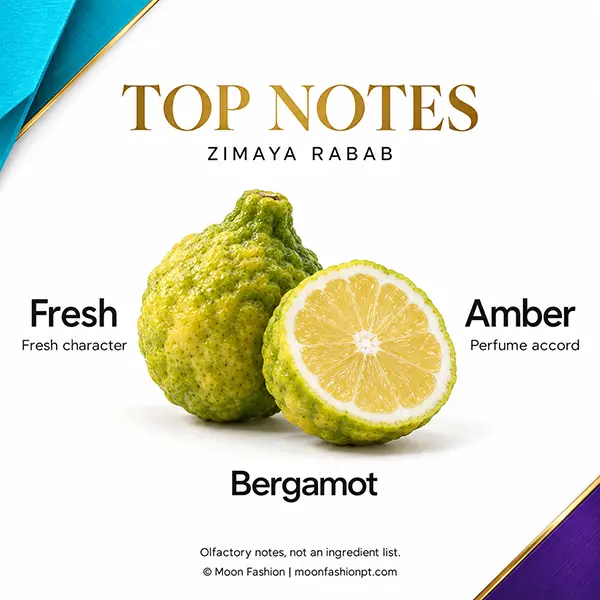
Top Notes: Fresh, Bergamot, Amber.
Bergamot gives a useful point of reference for the opening’s citrus direction. Amber sits in the same stage, so the beginning is not described solely through freshness. The contrast to look for is a brighter edge alongside a warmer impression, rather than a promise of a cold, watery scent.
Why does amber at the top change the expectation?
When amber appears only in a base description, a buyer may expect warmth to arrive after the fresher material has receded. Here it is already named at the opening. That makes the relationship between lift and warmth relevant from the first impression, even though a note list cannot predict which side you will notice most.
This is particularly useful if you often choose citrus perfumes for their sharpness. Rabab Blue’s opening may make more sense to someone who welcomes a warmer counterpoint than to someone who wants a consistently brisk citrus effect. The amber does not automatically cancel the freshness; the interest lies in how the two directions may sit together.
“Fresh” is a description of character rather than a specific botanical material. It is not evidence of mint, sea salt, cucumber or another ingredient that has not been named. Likewise, amber in perfumery is an olfactory idea, not a claim that fossil amber is dissolved in the bottle.
There is also no need to assign a particular country of origin to the bergamot. A regional citrus name would create a more specific promise than the manufacturer’s note wording gives here. The useful information is its role in the opening, not an invented sourcing story.
Through the middle: the fruit is candied, and the flowers matter
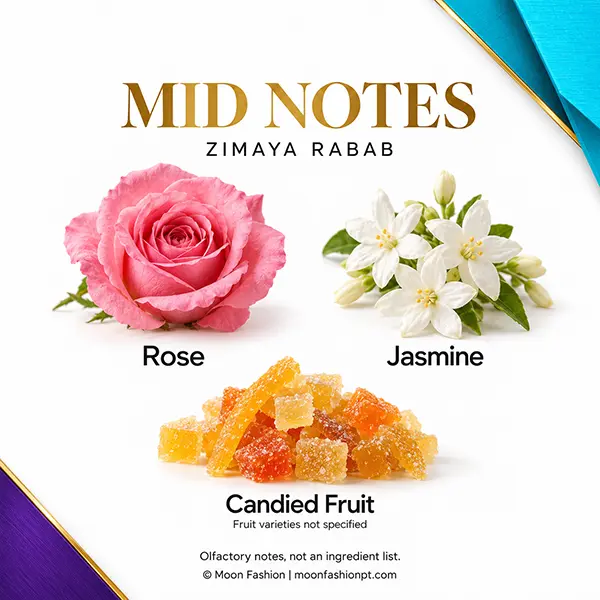
Mid Notes: Rose, Jasmine, Candied Fruit.
The middle is not an unnamed bowl of fresh fruit. Candied Fruit points towards a confectioned kind of sweetness, with rose and jasmine sharing the stage. That floral pairing is central to the choice: the fragrance should not be approached only as a citrus scent or only as a vanilla gourmand.
What can the flowers add to a candied-fruit idea?
A sweet fruit impression can feel quite different when it is framed by flowers. Rose may give the middle a fuller floral contour, while jasmine offers another floral direction alongside it. In this composition, their presence makes the relationship between sweetness and floral character more useful than trying to name a single fruit.
This is an interpretation of the listed structure, not a claim that rose must dominate or jasmine must remain in the background. If either flower is especially important to your preferences, judge how the perfume develops on you rather than assuming that the order in the list settles the question.
Candied Fruit is deliberately broad. The manufacturer does not identify an individual fruit assortment here, so the educational illustration should not be read as a recipe. Its colours and pieces do not establish cherry, orange, pineapple or any other named fruit as a separate official note.
The practical distinction is between liking fruit-like sweetness generally and wanting a particular recognisable fruit. Rabab Blue can be considered for the first preference. If the second is the reason you are buying, the note list alone cannot confirm that it will meet that expectation.
At the base: a conversation between softness and definition
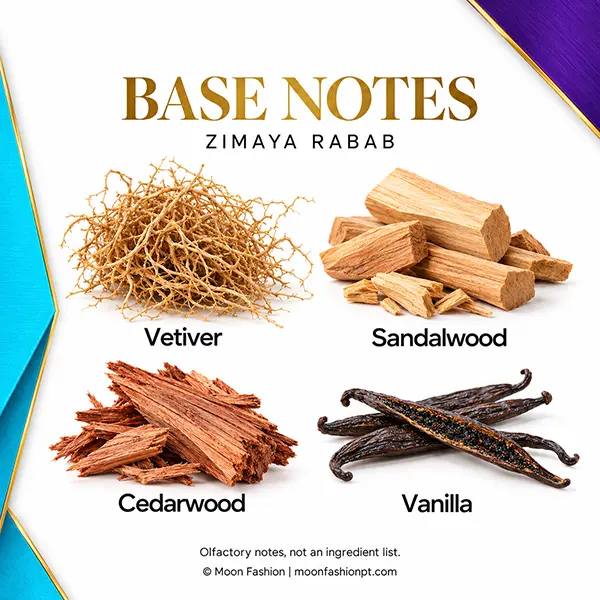
Base Notes: Vetiver, Sandalwood, Cedarwood, Vanilla.
Vanilla belongs to a foundation that also contains three different woody or root-like directions. Sandalwood can suggest a smoother texture, cedarwood a more defined woody contour, and vetiver a drier, earthier aspect. Their balance may shape whether the finish feels rounded, structured or somewhere between the two.
Does this make Rabab Blue a creamy vanilla perfume?
Vanilla can help explain a sweeter impression, and sandalwood provides a plausible point of reference for softness. However, treating those two names as the entire base would leave out the more contrasting possibilities offered by cedarwood and vetiver. A buyer looking for a purely dessert-like vanilla should consider the wider composition.
Equally, the presence of cedarwood and vetiver does not prove that the finish will feel austere or strongly earthy. The other materials may soften that impression. The note list is useful because it identifies the directions involved, not because it gives a measured sweetness-to-dryness ratio.
Try to notice the texture of the settled scent rather than searching for four separate smells. Does the finish feel smooth enough for your taste? Does a woody edge add interest, or does it become the part you would prefer to be quieter? These questions turn the base into a personal buying decision rather than a vocabulary test.
It is also worth separating texture from strength. “Creamy”, “dry” and “woody” describe how a fragrance can feel; none of them guarantees how far it projects or how long it lasts. A soft-feeling finish can still be noticeable, and a distinct woody note is not itself a performance measurement.
The thread that holds the stages together
Read across the composition and the most interesting possibility is continuity: the opening contains warmth as well as brightness, the middle adds floral sweetness, and the base offers another way for sweetness to meet texture. The balance can move without the perfume becoming three unrelated scents.
The candied direction may act as a bridge towards the sweeter side of the base. The flowers give the middle an identity of its own, while the woody foundation provides a different frame from the opening. This is a useful way to anticipate development without assigning invented minute marks.
What should you compare when you try it?
Start by noticing what attracts you in the first impression: the brighter edge, the warmer side, or the way they combine. Once the perfume has settled, ask whether the floral centre and the texture of the finish still give you the effect you wanted. The answer matters more than whether every named note is individually recognisable.
A fragrance can be enjoyable at first and less suited to your preferences later, or the other way around. For Rabab Blue, the meaningful comparison is between the opening’s contrast and the later relationship between sweetness, flowers and woods. There is no reason to make your decision from the first spray alone.
Main Accords: use the community profile as a vocabulary, not a formula
The Fragrantica listing for Rabab Blue uses Citrus, Fruity, Sweet, Amber, Powdery, Musky, Vanilla and Fresh Spicy as Main Accords. These are specialist profile labels, not manufacturer ingredient claims or measured percentages.
That listing also gives a different note pyramid from the current manufacturer page. The profile is therefore useful only as a qualified description of how Rabab Blue is catalogued and discussed; it should not replace the official stages above or become a definitive ranking of this composition.
Why might a wearer mention musk when it is not in the official stages above?
A person can use a familiar scent word to describe an overall impression rather than an individually identified material. A musky, powdery or creamy perception is not the same thing as a verified ingredient declaration. Community language can help explain what someone noticed without proving how the fragrance was made.
There is no confirmed reformulation timeline here that explains the difference between the published pyramids. Combining both lists would give you a new composition that neither source actually presents. When comparing listings, keep the full product name, concentration and bottle size together instead of adding every note you encounter.
How much weight should you give performance reviews?
Purchaser feedback published for Rabab Blue is divided: some report a softer or less persistent scent, while others describe longer-lasting wear. That disagreement is a reason to keep expectations flexible, not to select the most impressive number and treat it as a specification.
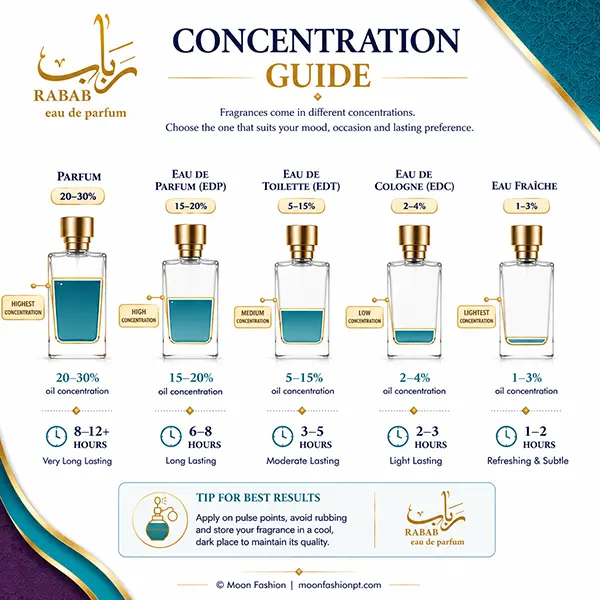
EDP identifies the concentration category. It does not establish a fixed wear time, an oil percentage for this product or the distance at which other people will notice it.
Can reviews help with everyday use?
They can help identify questions to ask during a trial, but the context matters. A report about fragrance remaining on clothing is not a direct answer to how noticeable it will be on skin. Similarly, being able to detect a dry-down close up is different from a room-filling effect.
For Rabab Blue, assess whether its floral sweetness feels comfortable at the distance and in the setting where you intend to wear it. A close indoor environment may make your own tolerance of sweetness and floral presence especially relevant. This is preference guidance, not a claim that the perfume has a fixed office, evening or seasonal role.
A negative review does not establish that every bottle performs poorly, and a positive one does not guarantee your result. It is more useful to distinguish scent enjoyment, persistence and projection as separate questions than to compress them into a single “strong” or “weak” label.
Choose the right presentation, then decide whether it suits your taste
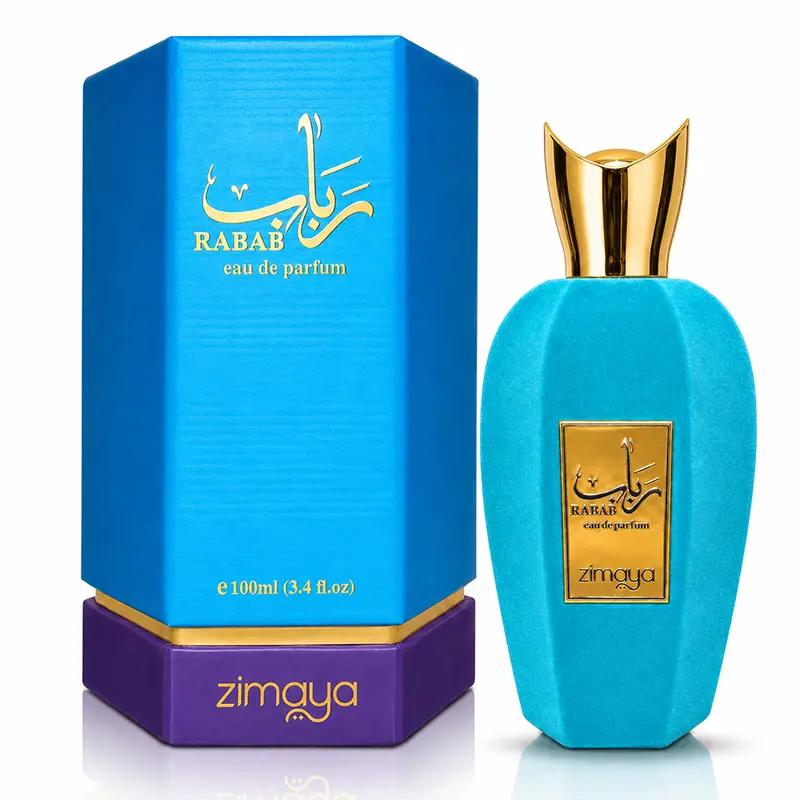
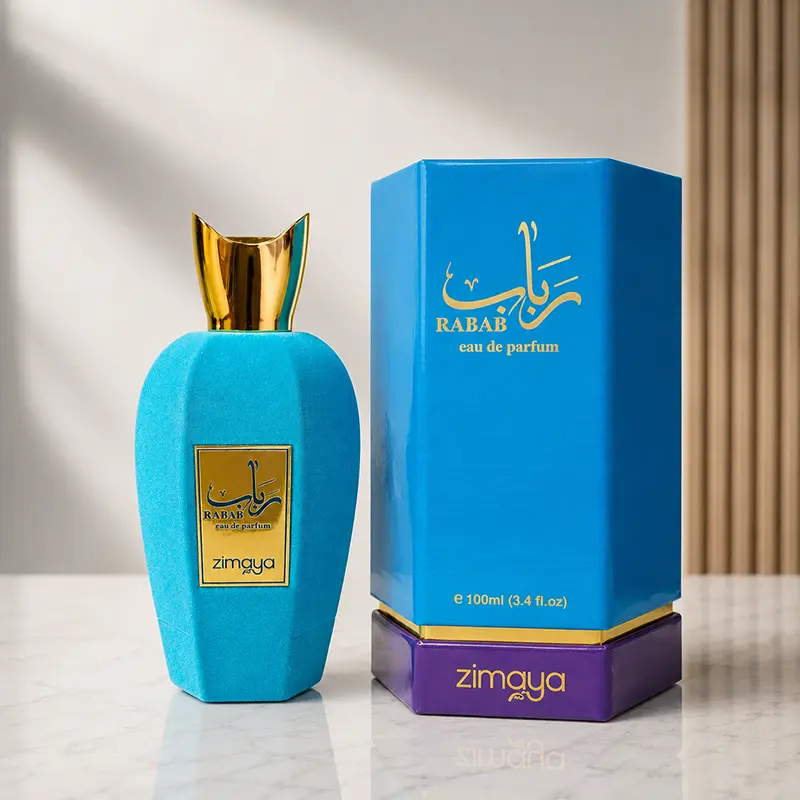
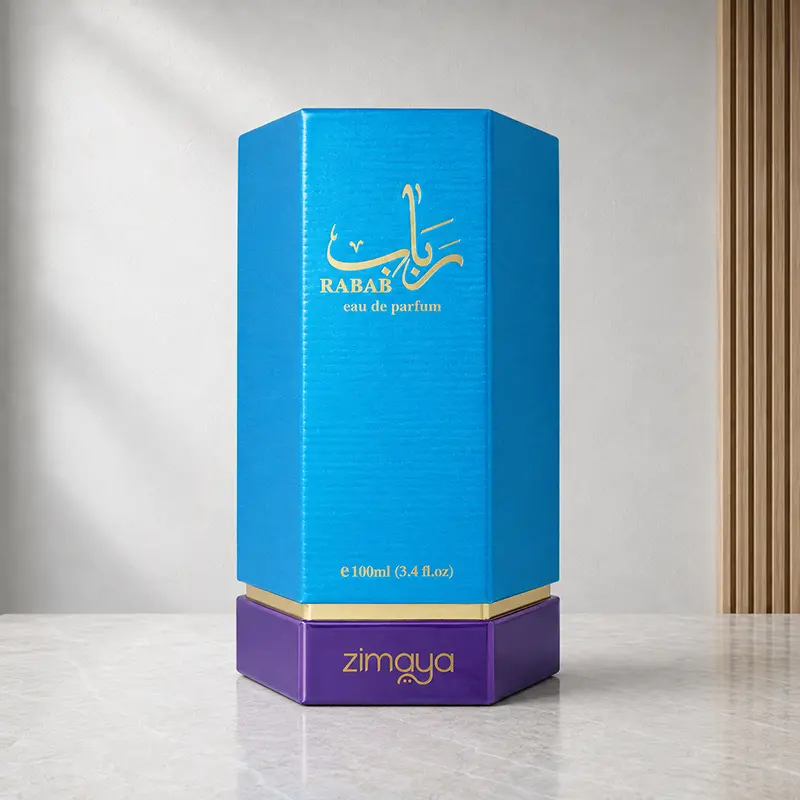
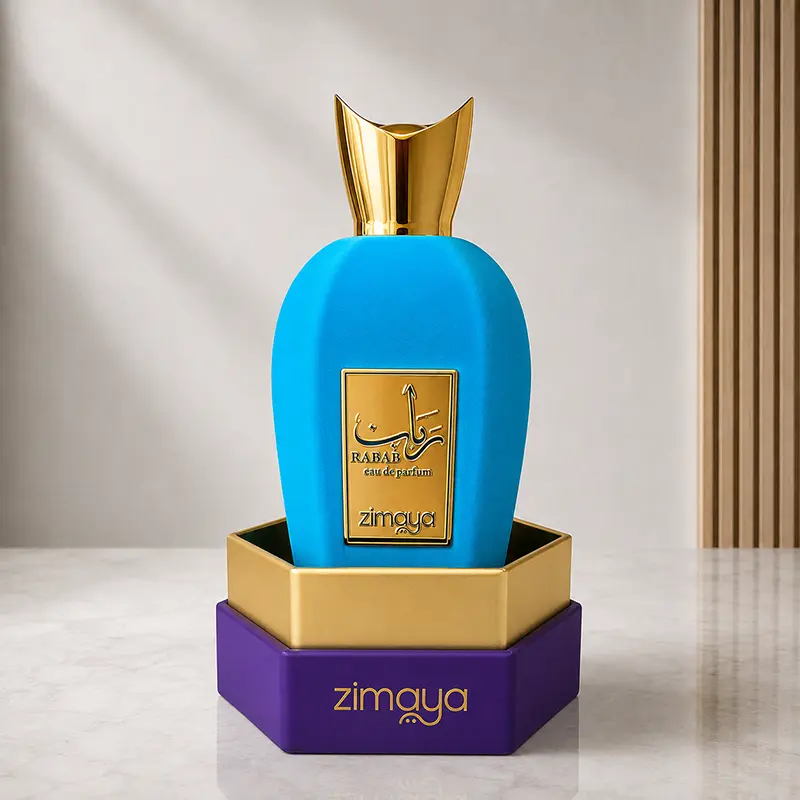
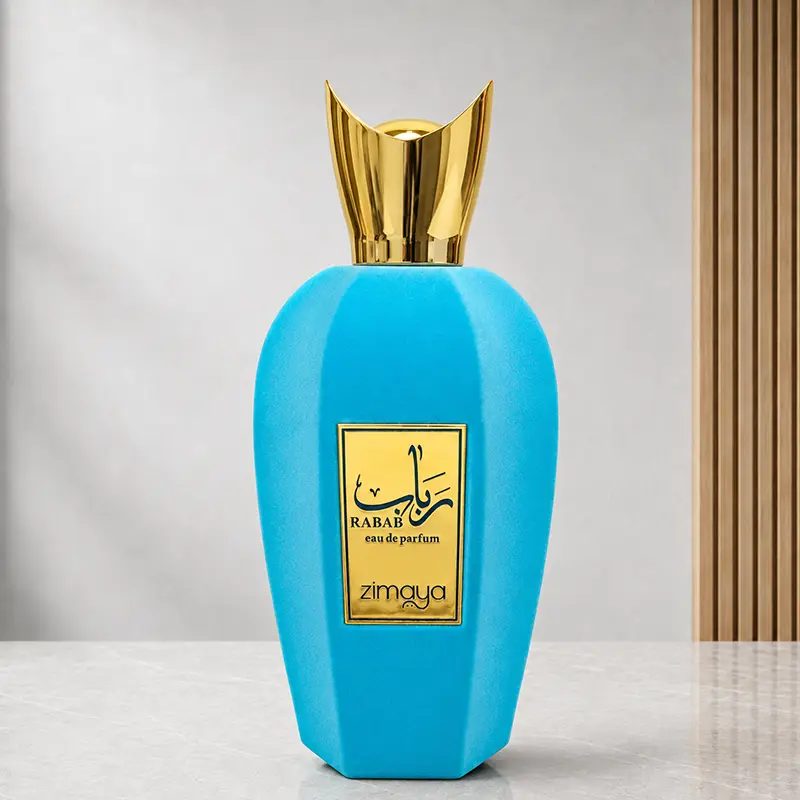
The gallery shows a turquoise bottle with gold-coloured details beside a blue box with a purple base. The EAN associated with the 100ml Eau de Parfum is 6290171071013. This helps identify the reference; a barcode alone does not authenticate a bottle.
- For yourself: the strongest reason to consider it is an interest in floral sweetness with a woody counterpoint.
- As a gift: familiarity with the recipient’s taste in flowers and sweetness matters more than the decorative blue presentation.
- When comparing names: keep Rabab Blue distinct from Rabab Gems and Rabab Pulp; a shared word does not make their compositions interchangeable.
Is Rabab Blue for women, men or anyone who likes the scent?
Zimaya’s UAE listing uses Pour Femme, while its Spanish regional listing uses Unisex. These catalogue labels differ; neither tells you exactly how the fragrance will feel on your skin. The floral sweetness and woody contrast are more concrete reasons to assess whether it fits your taste.
If you usually shop by a gender category, use this as an opportunity to identify the actual preference behind it. You may be looking for less sweetness, more floral presence or a drier finish. Those are meaningful things to evaluate in Rabab Blue. A label alone cannot establish them, and it should not replace a trial when one of those qualities matters strongly to you.
Would seeing it in person make the choice easier?
Moon Fashion has physical shops in Portugal. Before travelling specifically for Rabab Blue, contact the shop to ask about the product or a tester; neither is guaranteed at every location. The Moon Fashion shop information helps you plan the visit.
Make Rabab Blue your choice when you want the sweetness to share the stage with flowers, texture and a woody finish.
| Specifications | Descriptions |
|---|---|
| Brand | Zimaya |
| Parent Brand | Afnan |
| Collection / Line | Rabab Series |
| Product Name | Rabab Blue |
| Product Category | Perfume |
| Concentration | Eau de Parfum |
| Liquid Volume | 100 ml |
| Target User | Unisex in the official Spanish listing; Pour Femme in the official UAE and Indian listings |
| Application Type | Spray |
| GTIN / EAN | 6290171071013 |
| Manufacturer | Afnan Perfumes LLC |
| Longevity / Wear Experience | Mixed user experiences, ranging from shorter wear to more persistent wear |
| Sillage / Projection Experience | User experiences vary, including softer projection and a more noticeable scent trail |
| Top Notes | Fresh, Bergamot, Amber |
| Mid Notes | Rose, Jasmine, Candied Fruit |
| Base Notes | Vetiver, Sandalwood, Cedarwood, Vanilla |
| Bottle Design | Turquoise-blue bottle with a gold-coloured cap and decorative front plaque |
| Packaging Type | Matching blue presentation box with gold-coloured decoration and purple detailing |
Latest Reviews
You May Also Like