
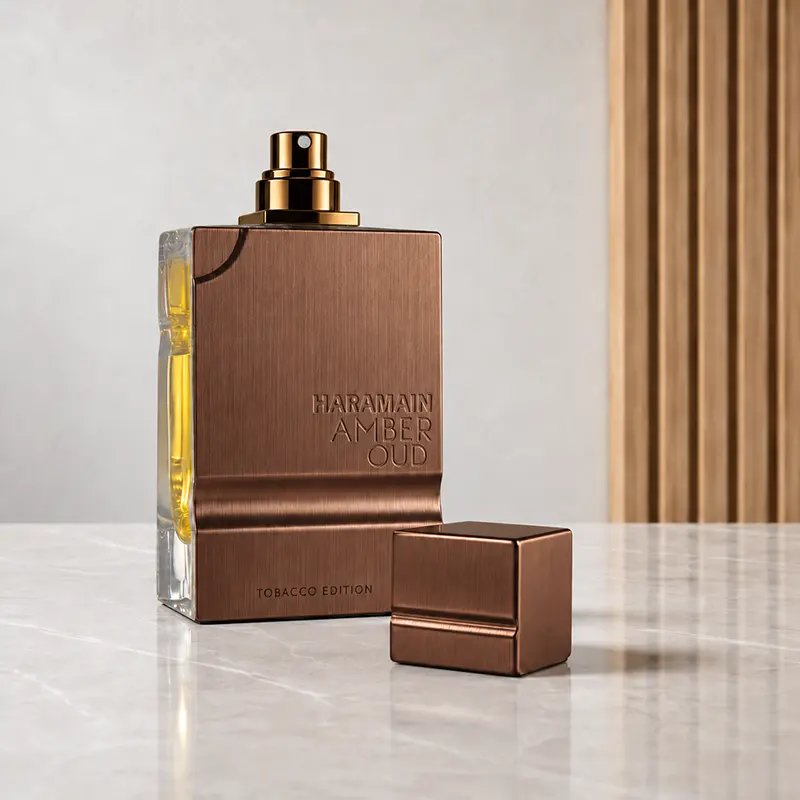
Warm spice leads the way before vanilla, incense and dark tobacco settle into a denser finish. See more
Al Haramain Amber Oud Tobacco Edition is a unisex EDP launched in . The official pyramid places tobacco at both ends of the structure, yet the practical buying question is not simply “Do you like tobacco?” Many wearers notice a forceful clove-anise-cinnamon impression before they experience the fragrance as clearly tobacco-led. That difference between the label and the first impression is the most useful way to understand this edition.
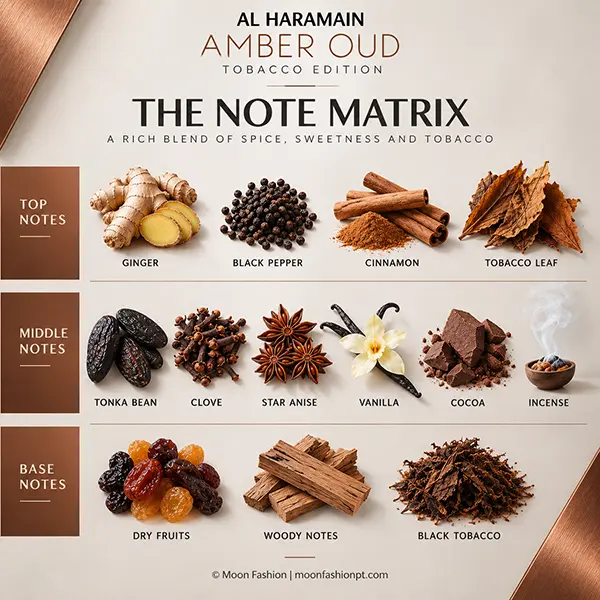
The composition is not built like a straight line from spice to tobacco to vanilla. The stages overlap. Ginger and black pepper sharpen the opening; cinnamon connects that dry heat to the sweeter middle; clove and star anise can make the transition feel even more aromatic; vanilla and tonka soften the centre without erasing the spice; cocoa and incense darken the sweetness; then dry fruits, woods and black tobacco leave a deeper residual character.
Top Notes: Ginger, Black Pepper, Cinnamon, Tobacco Leaf
Ginger and pepper give the opening lift and bite, while cinnamon sits between dryness and sweetness. Tobacco leaf is already present, but the surrounding spices can make the opening feel sharper and less obviously “tobacco-sweet” than the name may suggest.
Middle Notes: Tonka Bean, Clove, Star Anise, Vanilla, Cocoa, Incense
This is the hinge of the fragrance. Clove and star anise extend the aromatic pressure from the opening; tonka and vanilla round the edges; cocoa gives the sweetness a darker register; incense adds a smoky-resinous shadow rather than a named resin identity.
Base Notes: Dry Fruits, Woody Notes, Black Tobacco
The base moves away from the brighter spice attack towards darker sweetness and a drier frame. Dry fruits can make the sweetness feel richer rather than fresh, woody notes give the finish structure, and black tobacco reinforces the darker direction without guaranteeing that every wearer will perceive tobacco as the dominant facet.
Perfume pyramids are useful maps, but they are not sealed time compartments. Ginger, black pepper and cinnamon are already working in the top. When clove and star anise begin to become noticeable, they reinforce the same general warm-spicy direction rather than introducing a completely new character. The result can feel like one continuous wave of spice.
This is why wearer descriptions repeatedly place clove, cinnamon or anise near the front of the experience even though the official stage order remains unchanged. That is a perception pattern, not a correction to the manufacturer’s pyramid. The distinction matters because a buyer who is sensitive to clove may detect it sooner and more strongly than someone who focuses first on tobacco leaf or cinnamon.
The practical implication is straightforward: do not judge this fragrance by the word “Tobacco” alone. Its early identity is a negotiation between peppery heat, cinnamon warmth, tobacco leaf and the approaching clove-anise centre. That makes the opening more aromatic and potentially more polarising than a soft vanilla-tobacco scent.
The middle does not simply “turn sweet”. Vanilla and tonka bean can reduce the sense of sharpness, but they sit beside clove, star anise, cocoa and incense. That means the sweetness remains shaded by aromatic spice and darker facets instead of becoming a clean dessert-like vanilla.
Cocoa is useful here because it can make the central sweetness feel deeper and less bright, while incense can introduce a dry, smoky or balsamic impression. Together, those facets explain why some wearers describe a richer, denser centre rather than a simple vanilla accord. The transition can feel smoother than the opening without losing the fragrance’s darker personality.
This also creates an expectation gap worth knowing before purchase. Someone attracted mainly by vanilla may find the spice load more persistent than expected. Someone who dislikes sugary gourmands may still find the darker cocoa-incense-tobacco framework more interesting than a straightforward sweet fragrance.
Tobacco is structurally important because Tobacco Leaf appears in the top and Black Tobacco returns in the base. Even so, wearer perception is divided. Some people experience a clearly tobacco-centred composition; others report that cloves, cinnamon, star anise, vanilla or general sweet spice occupy more attention for much of the wear.
That disagreement should not be “resolved” into one universal answer. It is part of the product’s identity. The tobacco is official, but dominance is perceptual. If your buying goal is a very dry, cigar-like or pipe-tobacco fragrance, this edition may not behave the way the name alone suggests. If you want tobacco woven into a dense warm-spicy structure, the expectation is better aligned.
The official base is unusually useful for understanding the late character because it does not simply repeat vanilla. Dry fruits, woody notes and black tobacco pull the fragrance away from fresh sweetness. In this structure, dry fruits can make the remaining sweetness feel darker, denser and more preserved than juicy; the woods can provide a dry frame; black tobacco keeps the finish connected to the edition name.
This late-stage combination also helps explain some of the associative language found in wearer descriptions. References to fruitcake, honeyed dried fruit, dark tea or spiced desserts are not extra official notes. They are ways people describe the overlap between dry fruit, lingering vanilla-tonka sweetness, warm spice and tobacco. The distinction matters because an association can be useful without being rewritten as a note pyramid.
For buyers, the residual signature is therefore more informative than a generic “warm base” label: darker sweetness, woods and tobacco remain after the most piercing spice has softened. Someone who enjoys only bright or airy tobacco scents may find that weight too dense; someone who wants a deeper finish may prefer it to the opening.
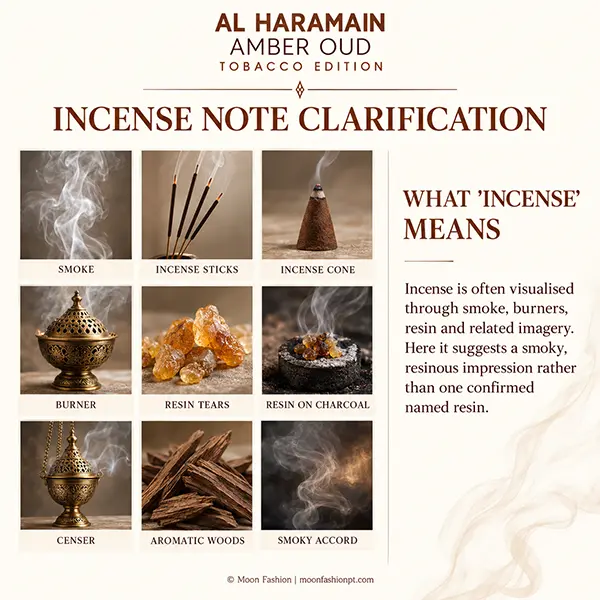
Al Haramain names the note simply as Incense. The image shows common visual conventions for the idea without identifying a specific resin.
The reviewed official note list does not identify frankincense, olibanum, myrrh, bakhoor or another specific resin. Assigning one of those names would add a precision the manufacturer has not supplied.
In scent terms, “incense” is best read here as a smoky, resinous or balsamic shade inside the middle. It matters because it prevents the vanilla-tonka-cocoa side from being understood as purely edible sweetness. It gives the centre another axis: warm and sweet, but also darker, drier and more atmospheric.
The illustration explains the note concept; it is not a formula diagram or ingredient declaration.
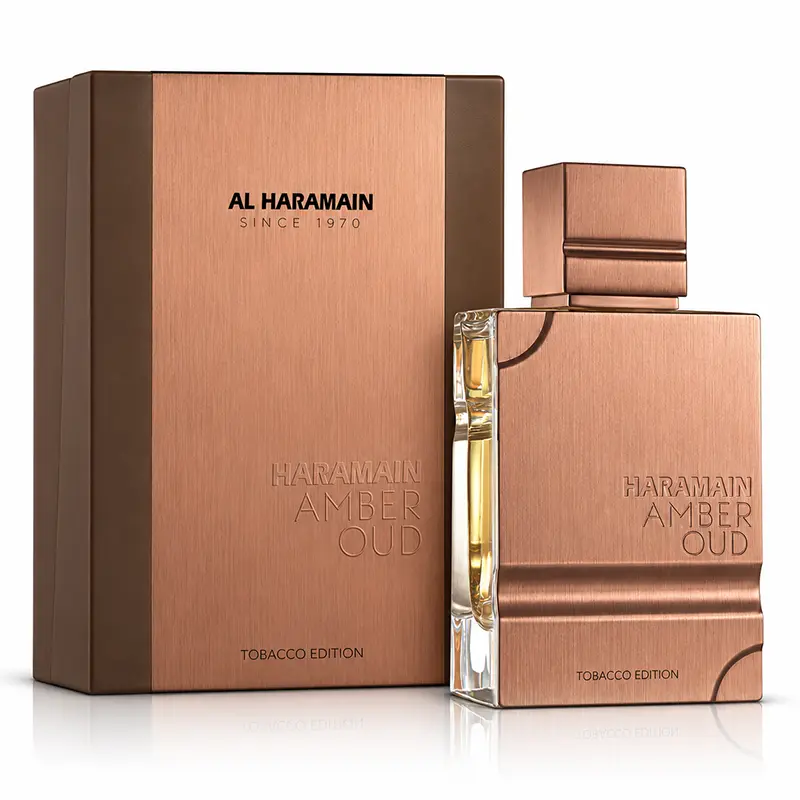
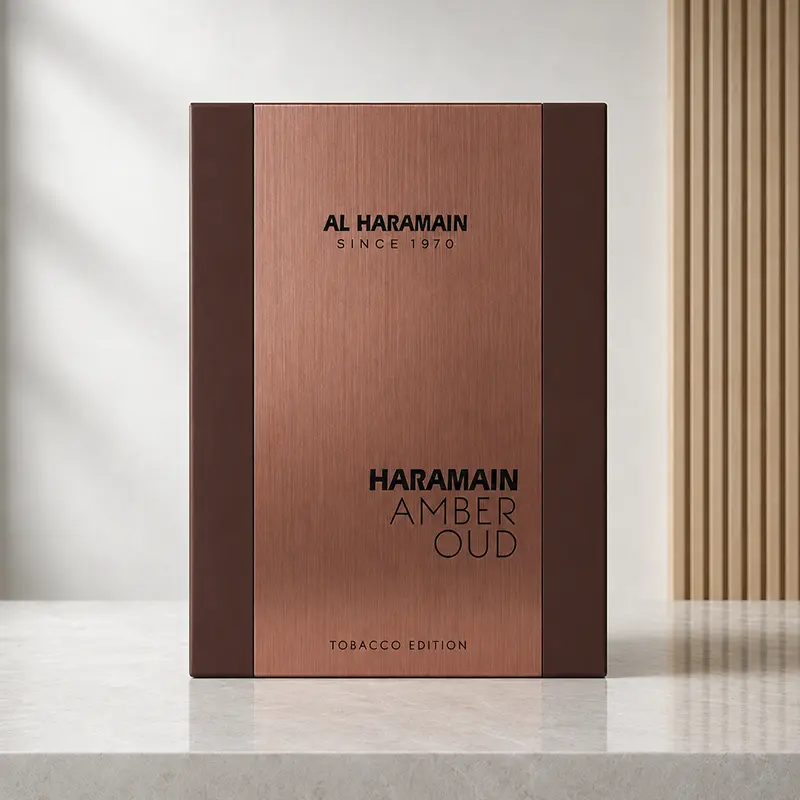
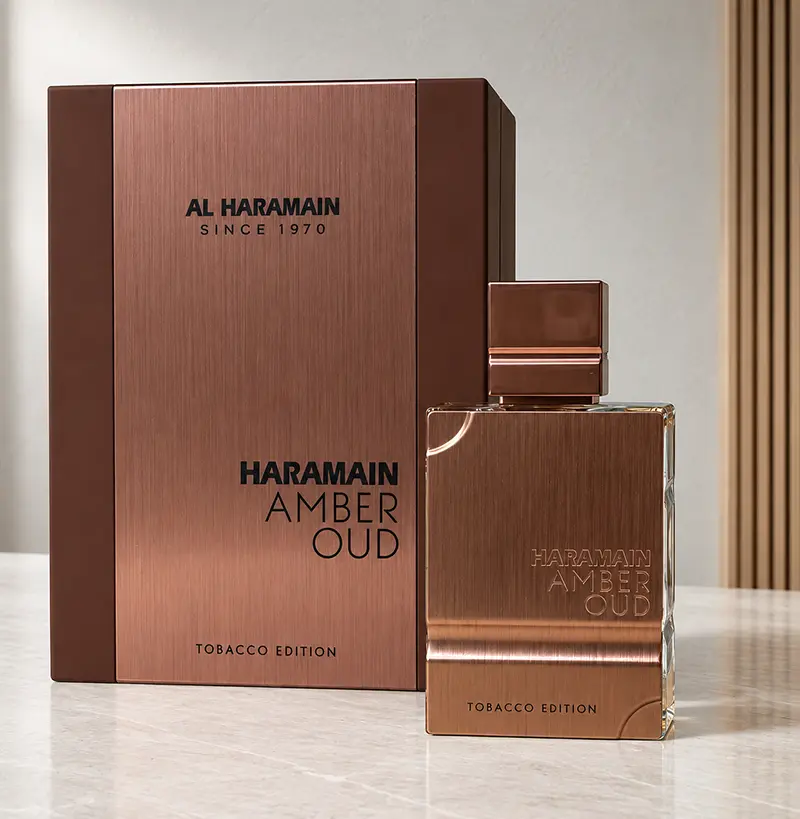
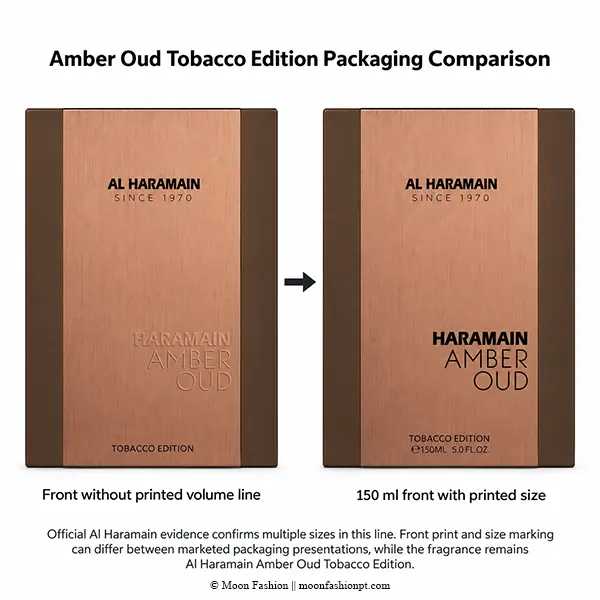
Two front presentations are documented: a volume-neutral front and a 150ml front with printed size information. Typography treatment also differs.
There is no reviewed manufacturer statement assigning these two fronts to a confirmed old/new transition, a specific region, a single batch period or an authenticity hierarchy. Community owners have also reported differences in fonts and other packaging details, which supports the existence of variation but not a single proven explanation for every difference.
Use the image to recognise that both presentations exist, not to decide that one must be fake. Check the exact product name, concentration, selected volume and the seller’s variant information together. If a size-specific image is shown, the printed volume should be coherent with that variant. If a shared image is volume-neutral, the selectable product data becomes more important.
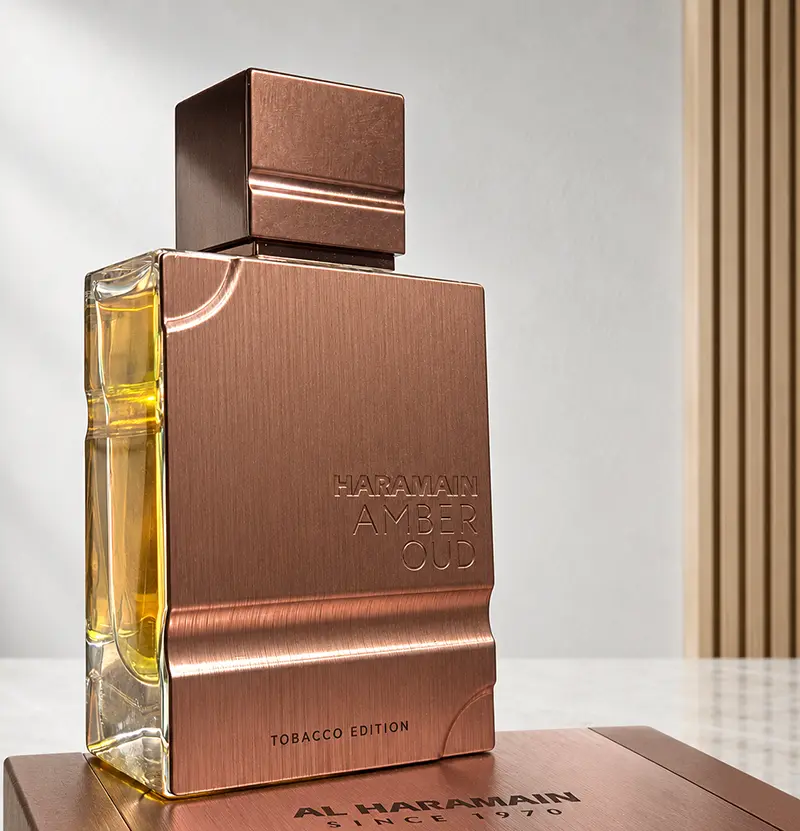
A barcode can help match a size-specific listing, but it does not authenticate a bottle by itself. Likewise, copper tone can shift under lighting, white balance and exposure, so colour alone is a weak authenticity test.
Manufacturer-confirmed Amber Oud Tobacco Edition sizes include 60ml, 100ml, 150ml and 200ml. These are volume variants of the same fragrance identity, not separate scent editions. Exact size-specific identifiers should remain attached to their own variant rather than being copied across the range.
These mappings are useful for variant recognition, not for declaring authenticity. Smaller quantities offered by retailers can use different containers or decant formats, so a small number of millilitres should not automatically be treated as a miniature factory bottle.
Those quantities should not automatically be described as manufacturer-confirmed Tobacco Edition bottle sizes. The manufacturer range verified for this edition is 60ml, 100ml, 150ml and 200ml. Smaller retail quantities can be decants or other seller-defined formats, while a 75ml Tobacco Edition factory presentation has not been established in the evidence used here.
If one of those quantities is offered, check the exact container, whether an original box is included and how the seller describes the format. This protects the buyer from assuming that every selectable volume reproduces the full retail bottle and packaging at a smaller scale.
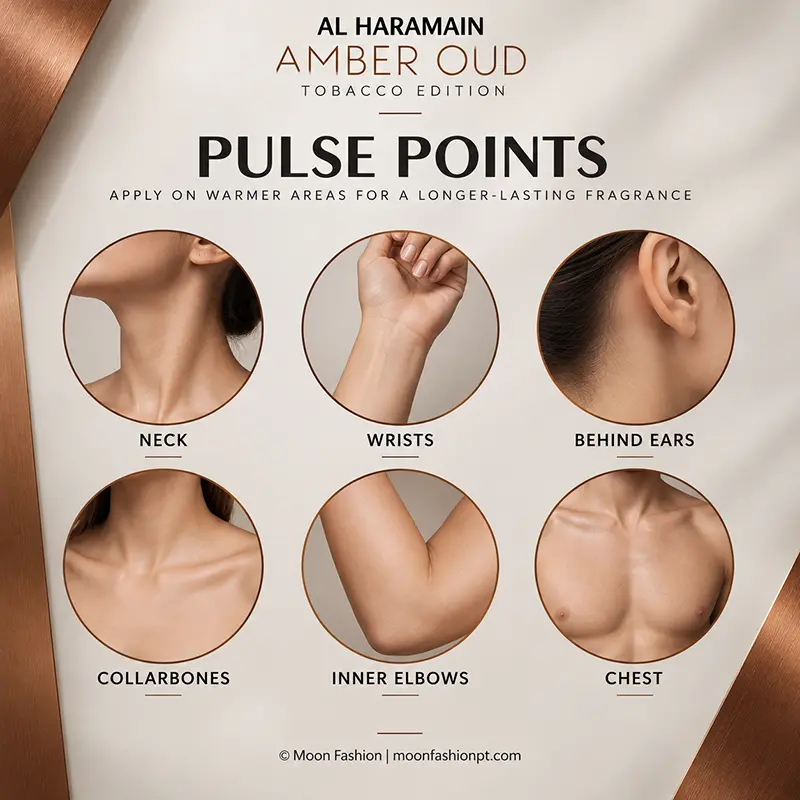
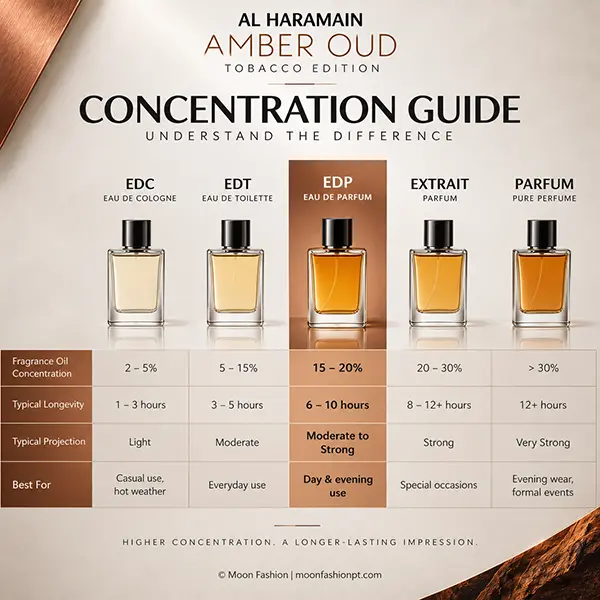
Wearer experience frequently describes substantial presence and persistence, but individual results vary enough that fixed hour counts or projection distances would overstate the evidence. Skin, clothing, climate, application and individual perception all influence the result.
The dense spice, vanilla, tonka and tobacco profile is often preferred in cooler conditions or evening settings, where the composition can feel easier to manage. That is practical wearer guidance rather than a manufacturer restriction. In offices or other close shared spaces, application level matters more than a universal “office safe” label.
The fragrance also has a clear polarising facet: clove and star anise can read as warm and addictive to one wearer and medicinal or excessive to another. That makes personal tolerance to those spices a more useful purchase filter than generic season labels.
No note named Oud appears in the official pyramid used for this edition. The safe statement ends there: oud is not listed among the official notes. A published note pyramid is not a full chemical formula, so absence from the list does not prove that no oud-related material exists anywhere in the composition.
The same applies to the word “Amber”. “Amber Oud” identifies the line, while “Tobacco Edition” identifies this particular direction. To predict the smell, the actual note structure is more useful than reading the collection name literally.
Both fragrances occupy a recognisable sweet-spicy tobacco space, which explains why the comparison appears repeatedly in wearer discussions. The useful part is orientation: tobacco, vanilla and warm spice are shared reference points. The unsafe part is turning that into an official relationship, a clone claim or a fixed similarity percentage.
Wearer opinion on closeness is divided. Some find the later stages very close in spirit; others consider Amber Oud Tobacco Edition more aggressive, clove-heavy or aromatic in the opening. If your decision depends on an exact substitute, sampling is safer than relying on the word “dupe”.
For this product, the strongest decision signal is not gender, hype or a similarity label. It is your tolerance for the spice structure. If you enjoy clove, star anise, cinnamon and pepper framing a sweeter vanilla-tonka centre and darker tobacco finish, the profile is coherent. If those spices regularly feel medicinal or overpowering, test first rather than expecting the name alone to predict the experience.
Moon Fashion has three physical showrooms in Portugal. A showroom location does not prove that this exact fragrance, a particular size or a tester is currently available there, so contact the relevant store before travelling specifically for Amber Oud Tobacco Edition.
Choose this edition for its spice-to-sweet-to-dark progression, not merely for the word “Tobacco” on the box.
| Specifications | Descriptions |
|---|---|
| Brand | Al Haramain |
| Model Name | Amber Oud Tobacco Edition |
| Volume | 60 ml |
| Concentration | Eau De Parfum (EDP) |
| Fragrance Type | Oriental Spicy / Amber Spicy |
| Gender | Unisex (Men & Women) |
| Top Notes | Tobacco Leaf, Cinnamon, Black Pepper, Ginger |
| Middle Notes | Vanilla, Cloves, Star Anise, Tonka Bean, Cacao, Incense |
| Base Notes | Tobacco, Dried Fruits, Woody Notes |
| Special Feature | Long Lasting |



.jpg)