Rayhaan Cedrus Blanc pairs crisp, clean aldehydes with orange blossom and a soft cedarwood-musk finish. See more
The word Cedrus suggests wood. Yet the defining question about Rayhaan Cedrus Blanc is often not how woody it smells, but whether its polished, laundry-clean opening appeals to you. This unisex Eau de Parfum combines bergamot and aldehydes with an orange-blossom heart and a cedarwood–white-musk base. The result can feel bright, airy and neatly put together, without necessarily behaving like the dry cedar scent its name might imply. A clean-linen effect can be welcome to one wearer and too detergent-like for another.
A bright, polished impression associated with the opening. It can make Cedrus Blanc feel almost sparkling, although wearers differ on whether that edge reads as elegant cleanliness or a sharper laundry-product effect.
The official cedarwood base anchors this facet. In this particular composition, wood need not overwhelm the clean and floral impressions: several accounts describe it as a background structure rather than the leading sensation.
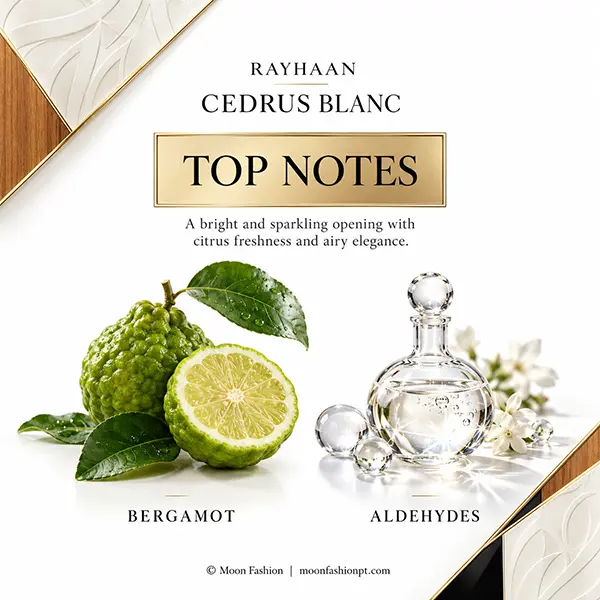
Bergamot supplies the citrus reference in the official opening. Its role is best understood as adding lift to the aldehydic brightness, not as a promise that the perfume will smell continuously of juicy fruit.
The freshness is closely associated with the clean, almost washed-fabric character. If your preferred fresh perfumes are distinctly marine or green, this is a different direction worth recognising before purchase.
Soap-like softness is a recurring wearer description, though not everyone finds it soft. The accord helps explain why Cedrus Blanc can suggest a freshly pressed shirt rather than a conventional lemon cologne.
A lively, slightly pointed facet of the scent profile. This database accord should not be misread as an official pepper or spice note: Rayhaan lists no such note in this perfume's pyramid.
How the profile comes together. Aldehydic and citrus brightness make the first impression feel lifted; Fresh and Soapy express its exceptionally clean direction. Woody gives that cleanliness a drier counterweight, while Fresh Spicy describes its sharper sense of energy. The white-musk base can help the later impression feel quieter and softer. These accords describe scent impressions, not formula ingredients or percentages.
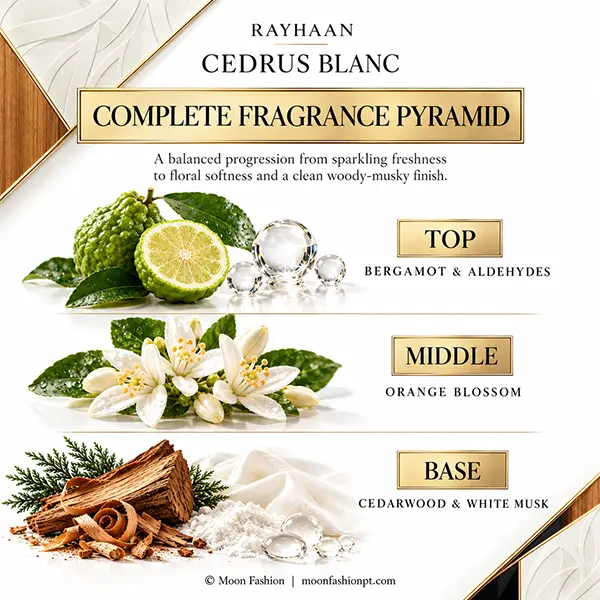
Bergamot gives the opening a citrus point of reference. Aldehydes change the style of that brightness: it can read as airy, polished and distinctly clean rather than like freshly squeezed citrus. If you usually enjoy sharp citrus peel but dislike scented laundry products, this is precisely the stage to test, because the two impressions are not interchangeable.
A published pyramid identifies a note; it does not guarantee that a wearer will pick it out separately. The citrus lift can blend with the overall aldehydic effect, leaving someone with an impression of sparkling soap rather than identifiable bergamot. This is a useful distinction when reading another review that calls Cedrus Blanc “citrusy” and expecting a traditional citrus-forward fragrance. Judge the opening as a combination, not as two isolated smells.
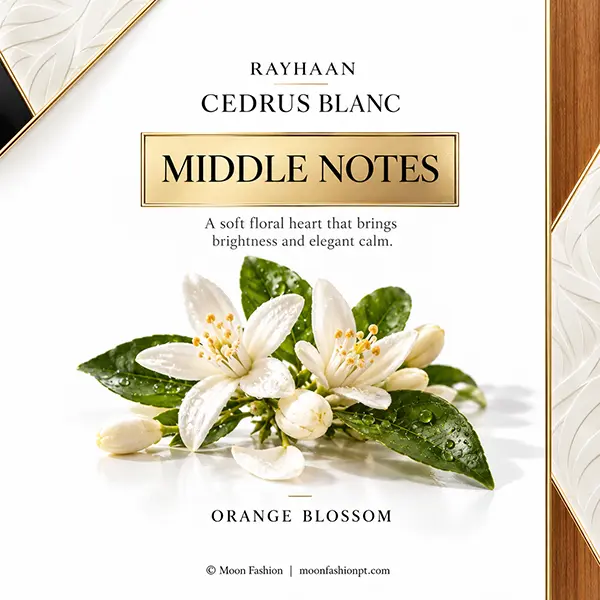
Rayhaan specifically lists Orange Blossom. It is not the same as orange fruit. Here it provides a plausible floral bridge from the brighter opening towards a gentler base. You might perceive a faint white-floral quality, or simply notice that the cleanliness becomes less pointed. The flower does not have to emerge as a prominent bouquet for this transition to make sense.
Not consistently. Some descriptions identify a delicate floral element, while others concentrate on soap, softness or the beginnings of a musky finish. The official single-note heart is therefore more useful for understanding the direction of the transition than for promising a particular level of floral intensity. If orange blossom is the sole reason you are considering Cedrus Blanc, a skin test is more informative than the note name alone.
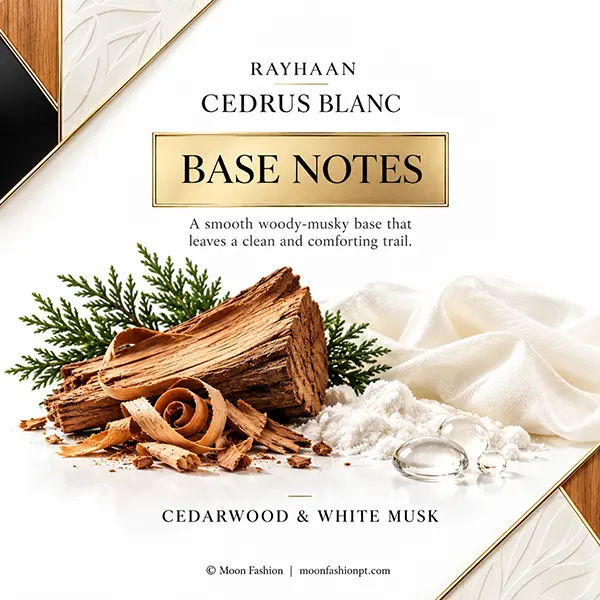
Cedarwood points towards a drier, woody foundation; white musk supports the idea of clean softness. Together, they offer a different finish from the glittering top notes, but the wood is not equally prominent to everyone. Some wearers describe a restrained woody trace, others a softer, sometimes powdery or creamy impression. Those last two words are perceptions, not extra official notes.
There is no dependable reason to promise that. The name, the published base note and the wearer experience answer slightly different questions. Cedarwood is part of the verified composition; “cedar-dominant” is an assessment of what stands out on a person's skin. If you are shopping specifically for a pencil-shaving, dry-timber or forceful cedar experience, avoid treating the product name as evidence that this is what you will get. Test the later phase, not merely the first spray.
The strongest shared observation is an impression of pronounced cleanliness. What divides opinion is its character. A wearer who likes crisp, aldehydic fragrances may notice freshly laundered cotton and a pleasing sense of order. Someone else may detect a synthetic-seeming detergent sharpness. This is a preference divide, not evidence that one bottle contains different official notes.
Those impressions occur in some wearer descriptions, especially in discussion of the softer phase. They are not uniformly reported, and the official pyramid contains no separate powder, cream or sweet ingredient declaration. A clean musky base can be experienced as rounder than the opening without justifying a blanket “sweet perfume” label. If sweetness is a decisive buying factor, try it rather than inferring a gourmand direction from a few adjectives.
Unisex is the product's intended audience, not a mathematical balance of traditionally gendered impressions. One wearer may associate the polished cleanliness with classic perfumery; another with a gentle contemporary everyday scent. Neither interpretation changes the label. The more useful choice is whether the clean floral-woody structure suits your taste and the occasions in which you want to wear it.
For everyday use, the question is not simply “Is it fresh?” but “How will this kind of freshness feel after the first burst?” Consider Cedrus Blanc for work, daytime routines or informal settings if you already enjoy soap-like fragrances. Be more cautious if you prefer your freshness clearly aquatic, herbal or citrus-led. Its opening can have more presence than the word clean implies.
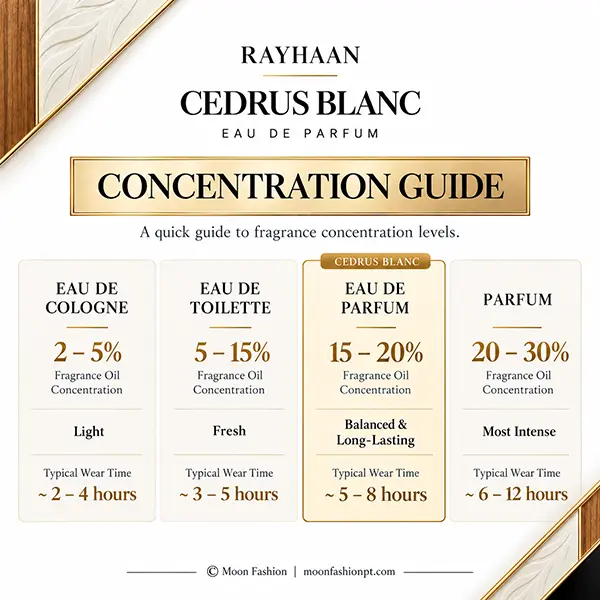
Wearer experiences are divided. Some report satisfying persistence or a clearly noticeable trail; others find that the scent becomes close to the skin sooner than expected. It would be misleading to convert those accounts into a guaranteed number of hours, an average projection distance or a promise that a higher concentration always lasts longer. The relevant question is whether the fragrance remains enjoyable at the distance and intensity that matter to you. A personal test gives more useful information than a universal performance claim.
The bright, clean profile can make warm-weather use attractive, but the season alone cannot predict how the aldehydic edge will be perceived. Nor does a woody base automatically make it a cold-weather scent. For close indoor work, shared transport or a busy room, consider the other people around you and choose an application level that suits the space. Weather and occasion are practical contexts, not official fragrance specifications.
No verified Cedrus Blanc instruction requires weeks of waiting before use. Storage cannot be promised to remove an aldehydic quality you dislike or turn mixed performance reports into a guaranteed result. Keep the bottle closed and away from direct sunlight and excessive heat. If your experience seems different on separate days, consider your environment and perception before assuming a change in the formula.
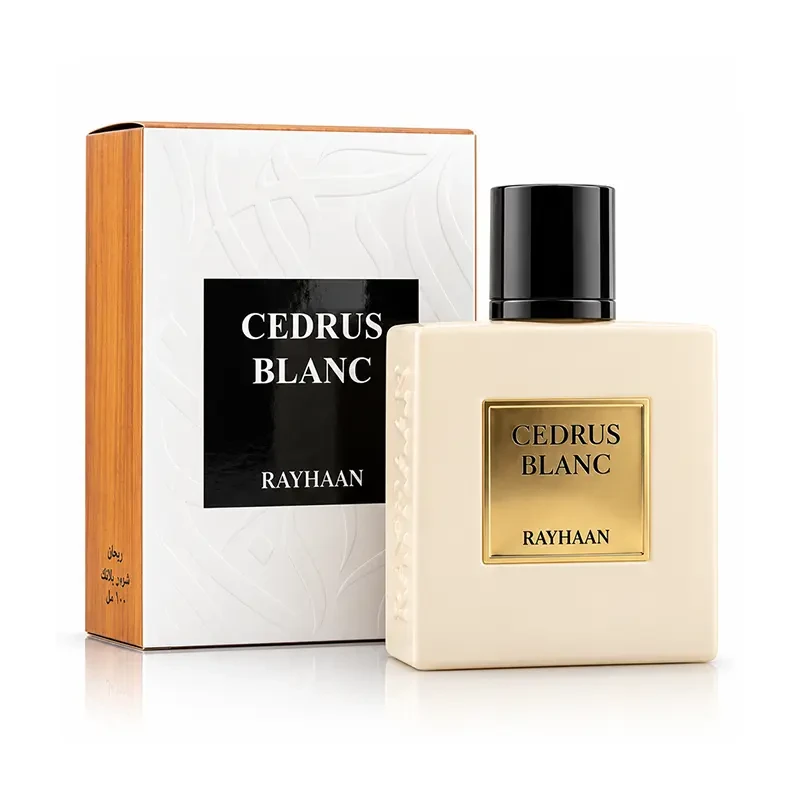
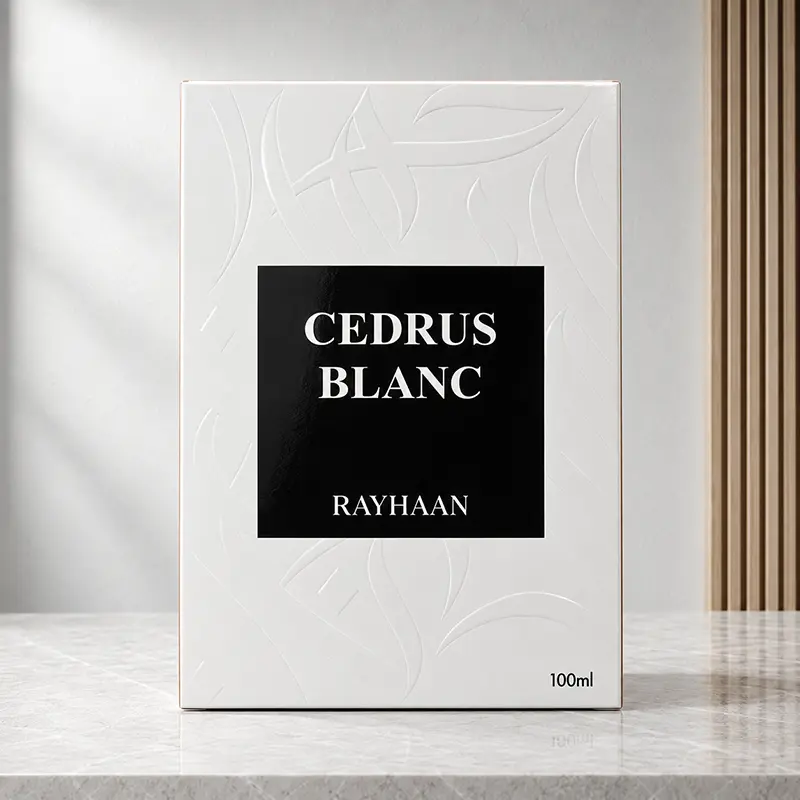
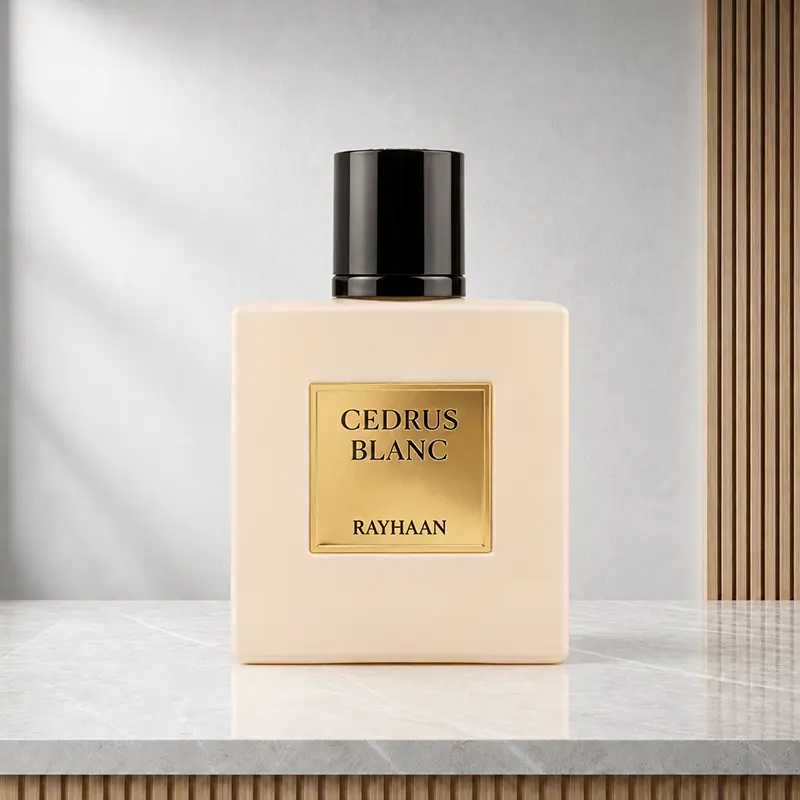
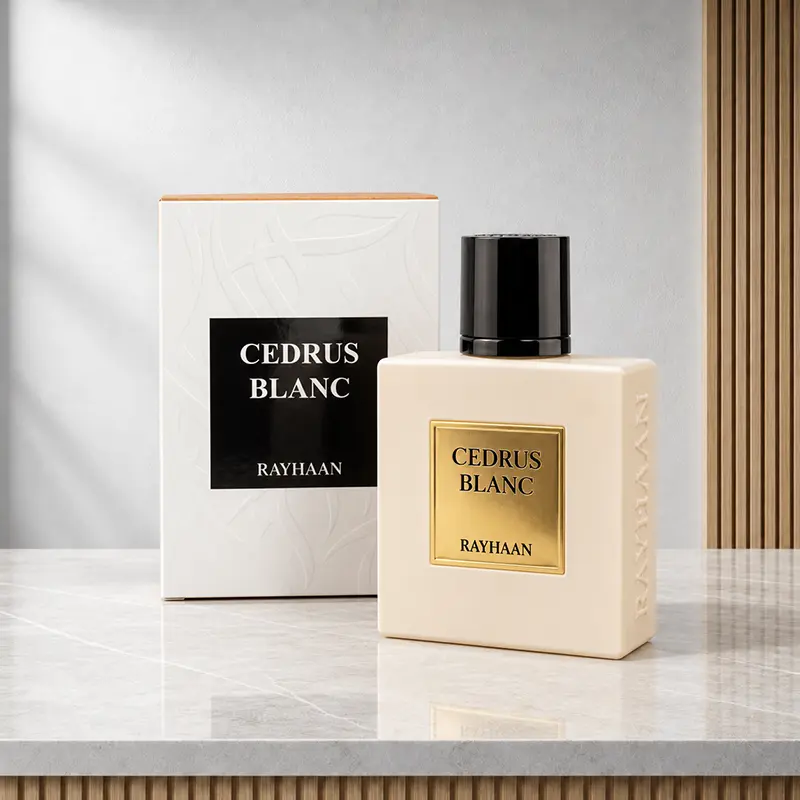
The verified presentation is Rayhaan Cedrus Blanc Eau de Parfum 100ml. In the supplied product photographs, the bottle has an ivory-coloured squared body, a glossy black cylindrical cap and a gold-coloured front plaque. The retail box has pale embossed-looking detailing and a contrasting black panel carrying the name. The 100ml variant is associated with EAN 6297001571408.
No. An EAN identifies a commercial variant; it is not an authentication certificate for an individual bottle. Where possible, review photographs of the product being offered, check that the packaging and stated volume are consistent, and ask the seller to explain material differences. Neither a gold-coloured plaque nor a particular arrangement of lettering is sufficient to declare a bottle authentic or counterfeit.
No. The manufacturer bottle confirmed for this product record is 100ml. A sample supplied by a retailer or fragrance transferred into a smaller atomiser is a different type of presentation, even when its contents come from a retail bottle. Read the listing's format carefully; do not infer an unverified factory size from the mere existence of a smaller purchase option.
Moon Fashion has physical shops in Portugal, but neither the bottle nor a tester is guaranteed at every location. Contact the relevant shop before travelling specifically for this fragrance. See the Moon Fashion shop locations.
The buying decision: choose Cedrus Blanc for its intriguing contrast between sparkling, soap-like brightness and a softer floral-woody base, not for an assumed blast of cedar. If aldehydes tend to divide your opinion, try the opening and dry-down before committing to a full bottle.
| Specifications | Descriptions |
|---|---|





.jpg)