Rayhaan Terra: brightness at the edge of a darker composition
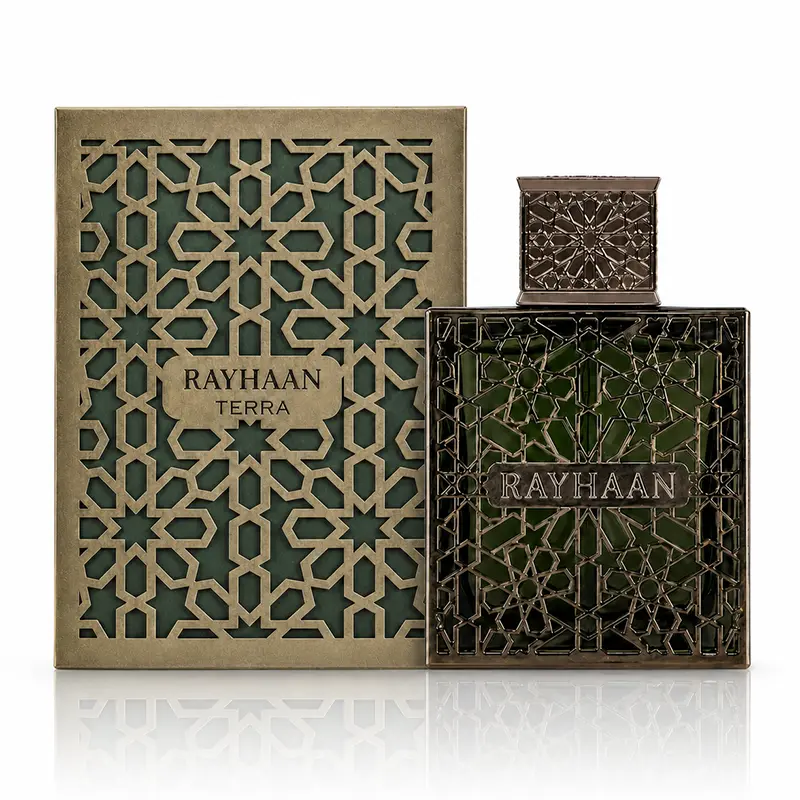
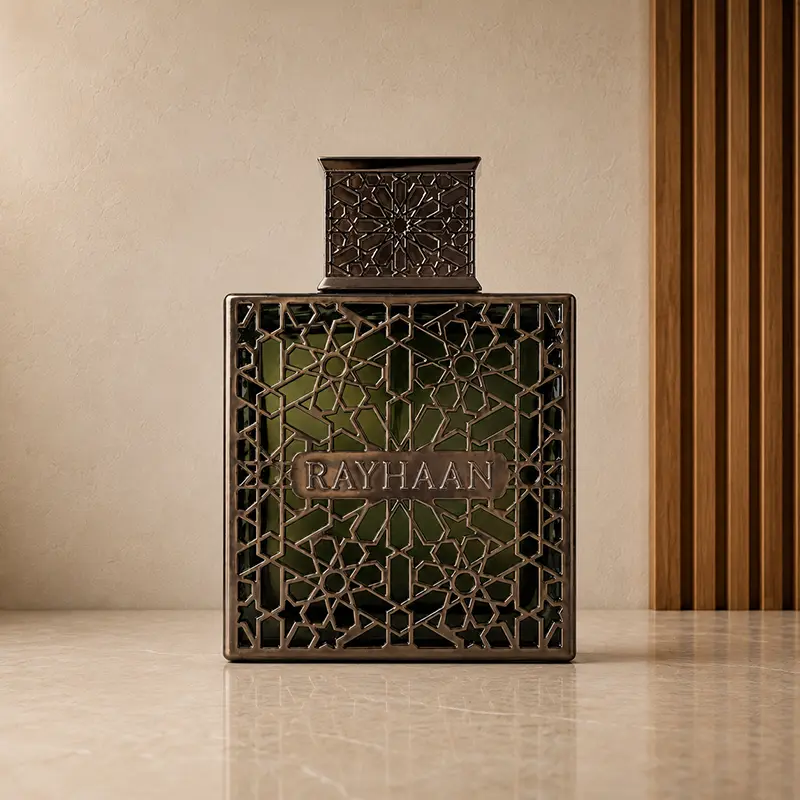
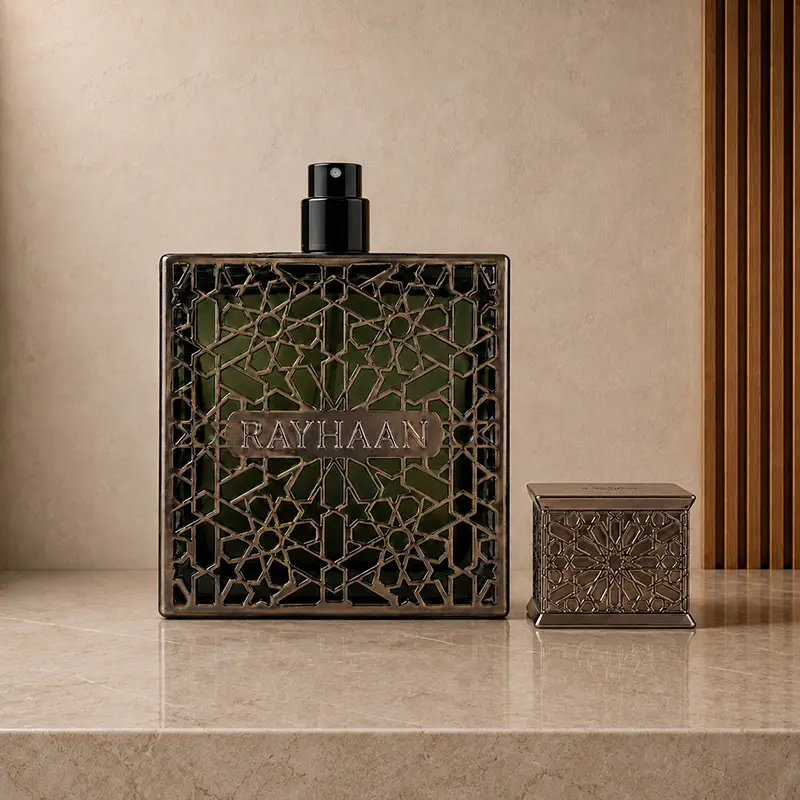
Rayhaan Terra is a 100ml Eau de Parfum for men built around a deliberate contrast: citrus and spice open the composition, while frankincense already hints at the deeper resinous structure waiting underneath. Rather than staying bright for long, the official note pyramid moves towards patchouli, aromatic spices, florals, amber, oud, vanilla and a broad group of resins.
That structure matters for a buyer deciding whether Terra fits their taste. It is not simply a citrus fragrance with a woody base, nor is it only about oud. The verified pyramid is unusually dense, and frankincense appears in both the top and base, giving the composition a clear thread from first impression to dry-down.
Who is most likely to appreciate this profile?
- Buyers who enjoy spicy, resinous and ambered fragrances rather than very clean or minimalist styles.
- Those who like cardamom, incense and patchouli supported by citrus rather than dominated by citrus.
- Wearers who are comfortable with cumin, anise, wormwood and saffron adding a more complex aromatic-spice character.
- People who prefer a base with oud, benzoin, labdanum, opoponax, vanilla and musk rather than a simple woody finish.
Specialist fragrance classification commonly places Terra in spicy-oriental territory. That label is useful as a broad orientation, but the official note progression gives a clearer picture of what the fragrance is actually built from.
What makes the composition more complex than the family label suggests?
The top already combines six different materials: frankincense, cardamom, elemi, lemon, bergamot and Sichuan pepper. This means the opening can be read as a meeting point between brightness, spice and resin rather than one dominant citrus effect. The heart then expands the spice vocabulary through anise, coriander, wormwood, cumin and saffron while patchouli provides a darker centre. Orange blossom, geranium and rose prevent the middle from being described accurately as “spice only”; the floral notes sit inside the aromatic framework rather than replacing it. The base is broader again, with frankincense returning beside vanilla, benzoin, amber, oud, opoponax, birch, ambergris, maltol, labdanum and musk. The result is a pyramid where each stage adds another layer instead of simply changing category. For a buyer, that makes Terra more relevant if complexity itself is part of the appeal.
How the fragrance develops
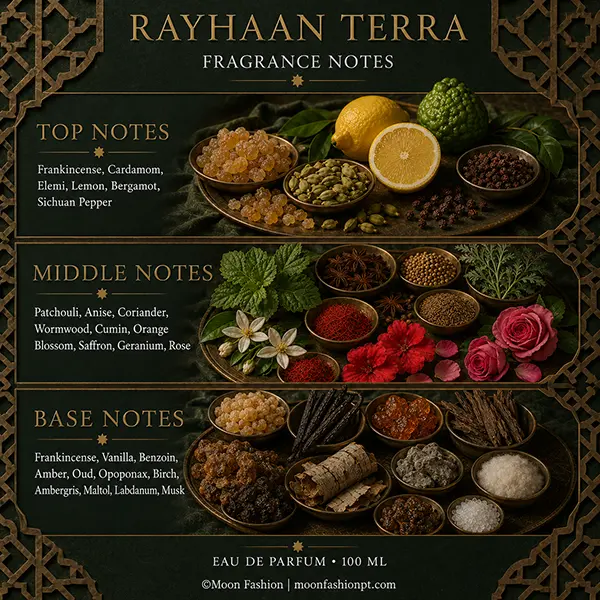
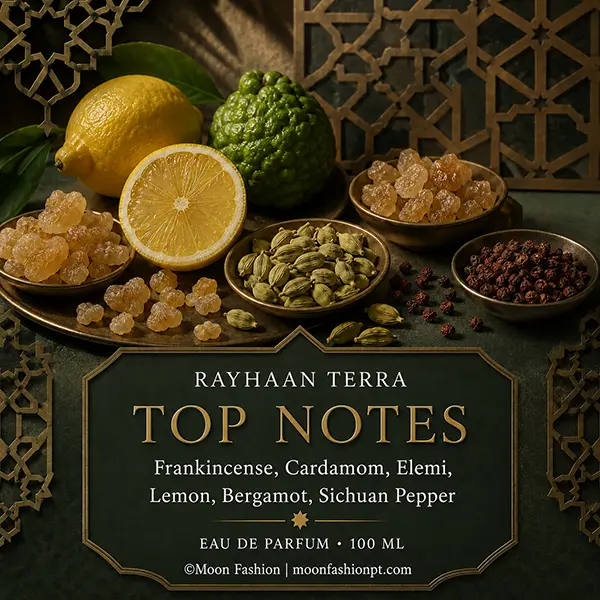
Top Notes: Frankincense, Cardamom, Elemi, Lemon, Bergamot, Sichuan Pepper
The first stage combines citrus lift with aromatic spice and resins, so the opening is likely to feel brighter than the base without becoming purely fresh.
Inside the opening: citrus, pepper and resin working together
Lemon and bergamot provide the clearest bright elements in the official top-note list. Cardamom adds a dry, aromatic spice character, while Sichuan pepper introduces a sharper peppery accent. Frankincense and elemi are important because they stop the opening from reading as a standard citrus-spice accord. Both belong to a more resinous aromatic space, and frankincense in particular links directly to the base because it is listed again later in the pyramid. This creates continuity: the fragrance does not have to abandon its opening identity in order to become deeper. Buyers who usually find citrus openings too fleeting or disconnected may appreciate that the bright notes are embedded inside a darker framework from the start. At the same time, anyone looking for a very transparent bergamot-led fragrance should note that the official opening contains several competing materials, so brightness is only one part of the first impression.
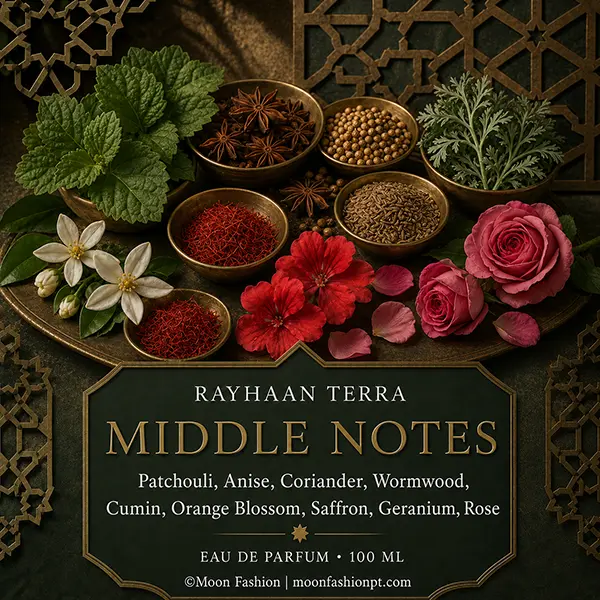
Heart Notes: Patchouli, Anise, Coriander, Wormwood, Cumin, Orange Blossom, Saffron, Geranium, Rose
The middle is the most crowded part of the pyramid, combining earthy patchouli, multiple spices, aromatic bitterness and a restrained floral layer.
Why the heart is the key decision point
The heart is where Terra becomes especially distinctive. Patchouli gives the stage an earthy, darker anchor, but the surrounding notes move in several directions. Anise can introduce a liquorice-like aromatic impression; coriander adds dry spice; wormwood contributes an herbal, bitter-aromatic facet; cumin can feel warm and savoury; and saffron brings another dry-spiced dimension. Orange blossom, geranium and rose add floral material without turning the composition into a floral-led fragrance. The important buyer point is balance: this is not a heart that can be reduced to one easy descriptor. Someone who enjoys layered spice and aromatic contrast may find this section more interesting than a simpler cardamom-patchouli formula. Conversely, buyers who strongly avoid cumin, anise or bitter herbal notes should consider those official materials before purchasing, because they are explicitly part of the composition rather than speculative reviewer associations.
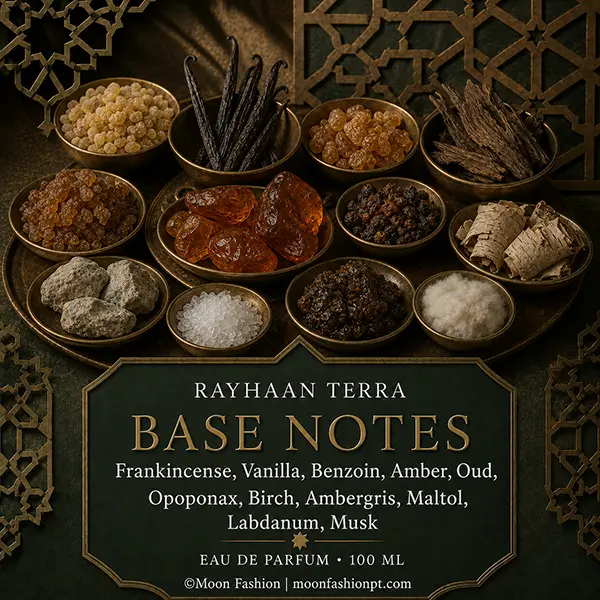
Base Notes: Frankincense, Vanilla, Benzoin, Amber, Oud, Opoponax, Birch, Ambergris, Maltol, Labdanum, Musk
The dry-down broadens into resins, amber, wood, sweetness and musk, with frankincense returning to connect the base back to the opening.
Reading the base without reducing it to “oud and vanilla”
Oud and vanilla are easy headline notes, but the official base is much more extensive. Benzoin, opoponax and labdanum all reinforce the resinous direction around frankincense. Amber adds another warm tonal layer, while birch introduces a drier woody contrast. Musk and ambergris contribute to the base structure, and maltol sits alongside vanilla as part of the sweeter side of the list. Because so many materials occupy the same stage, it is safer to think of the base as a layered resin-amber-wood construction with sweetness running through it, rather than as a simple sweet oud accord. Buyers who want one dominant gourmand note may find that description too narrow for Terra. Buyers who enjoy a base that continues to change through resin, wood and sweetness may find the official structure more promising.
What changes most from the heart into the base?
The heart carries the greatest concentration of individual spices and aromatic notes: anise, coriander, wormwood, cumin and saffron all sit around patchouli, orange blossom, geranium and rose. In the base, that vocabulary shifts away from named culinary or herbal spices and towards resins, amber, wood and sweetness. Frankincense is retained, but benzoin, opoponax and labdanum broaden the resinous side while oud and birch strengthen the woody contrast. Vanilla and maltol introduce sweetness inside that darker framework. The transition therefore suggests a movement from a busy aromatic-spice centre into a more resinous and grounded dry-down. That interpretation is drawn from the verified note order; it does not claim an exact minute-by-minute development, which can vary by wearer.
The frankincense thread is the clearest signature in the pyramid
Frankincense is one of the few notes explicitly repeated at two stages: top and base. That repetition gives Terra a useful internal logic. The opening can introduce incense before the fragrance reaches its deepest materials, and the base can return to the same note after the spicy heart has passed.
Why that repetition matters to the wearer
Repeated notes often make a pyramid feel more connected because the transition between stages does not require a complete change of vocabulary. Here, the frankincense in the top can sit beside lemon, bergamot, cardamom, Sichuan pepper and elemi, while the frankincense in the base sits among benzoin, amber, oud, opoponax, labdanum and musk. The surrounding materials are different, so the same named note can play a different contextual role. Early on, it helps pull the citrus-spice opening towards a resinous direction. Later, it becomes part of a much heavier base structure. This is a derived reading of the verified pyramid rather than a manufacturer claim about exact development, but it is useful when deciding whether the composition seems coherent with your preferences.
Performance and wearing context
Community feedback generally suggests that Terra has a strong-performing character, although individual experiences vary and there is no verified manufacturer duration that should be treated as guaranteed. The composition itself is dense enough that many buyers may find it more intuitive in cooler conditions or in situations where a richer scent profile feels appropriate.
How to interpret community performance comments
Wearer reports are useful for setting broad expectations, but they are not technical specifications. Skin, temperature, humidity, application and individual perception can all change how a fragrance is experienced. For Terra, the safest conclusion is that community impressions tend to place it on the stronger side rather than the very light side. It would be inaccurate to convert that pattern into a fixed number of hours or a guaranteed projection distance. If performance is your deciding factor, treat community consensus as orientation and the verified concentration as product identity, not as a promise of a specific result.
When might the profile feel most natural?
The combination of incense, patchouli, saffron, amber, oud, benzoin, opoponax and labdanum suggests a richer tonal profile than the lemon and bergamot in the opening might imply by themselves. Community preference patterns also commonly lean towards cooler-weather wear. That does not make Terra “winter only”, and it does not rule out warm-weather use. A buyer who is sensitive to dense resinous or spicy fragrances may simply prefer lighter application in heat, while someone who enjoys substantial amber-resin structures may use it more broadly.
If your priority is a spicy incense-led Eau de Parfum with a deep resinous base, Terra is worth considering on the strength of its verified note structure rather than on exaggerated performance claims.
Buying the correct Terra online
How does the 2025 launch context help with identification?
Specialist fragrance records consistently place Rayhaan Terra's launch in 2025. That date is useful as corroborated catalogue context when distinguishing the product from older Rayhaan releases with different names or packaging. It is not necessary to treat “2025” as a promotional claim, and it should not be used to imply that the fragrance is currently new. Its practical value is identification: Terra belongs to a recent part of the Rayhaan catalogue, while the verified name, 100ml Eau de Parfum format and note pyramid remain the stronger checks when comparing listings.
The stable identity to check is Rayhaan Terra, Eau de Parfum, 100ml, marketed for men. A corroborated EAN associated with this exact 100ml EDP variant is 6297001571262; it can help with listing comparison, but a barcode should not be treated as proof of authenticity.
Also compare the official three-stage note pyramid rather than relying on shortened retailer summaries. Terra's heart and base are especially extensive, so a listing that reduces the fragrance to only a few headline notes gives an incomplete picture of the product.
Three checks that prevent version confusion
First, confirm the product name and the 100ml Eau de Parfum format. Second, compare the official note structure, especially the presence of frankincense in both the top and base and the unusually broad middle-note list. Third, use the corroborated EAN only as an identifier aid when it is shown for the same brand, product, concentration and size. None of these checks can guarantee authenticity on their own, but together they make it easier to notice a listing that does not match the verified product identity.
What does the Eau de Parfum format tell you here?
For Terra, Eau de Parfum is a verified part of the product identity and helps distinguish this 100ml version from another concentration if one appears in a marketplace listing. It should not be used as shorthand for guaranteed longevity. The more useful product-specific information is the combination of the EDP format with Terra's verified note density: six top notes, nine heart notes and eleven base notes. That tells the buyer much more about the intended compositional complexity than a concentration label alone.
Questions buyers often still have
Is Terra mainly sweet?
Vanilla and maltol appear in the base, but they sit beside frankincense, benzoin, amber, oud, opoponax, birch, ambergris, labdanum and musk. The official pyramid therefore supports describing sweetness as one facet of a much broader resinous, woody and ambered base rather than the sole direction of the fragrance.
Is the floral side prominent?
Orange blossom, geranium and rose are all official heart notes, so floral material is genuinely part of Terra. However, the same heart also contains patchouli, anise, coriander, wormwood, cumin and saffron. The note balance therefore suggests florals functioning inside a dense spicy-aromatic heart rather than defining the entire composition.
Are the fragrance notes an ingredients list?
No. The Top, Heart and Base notes describe the fragrance composition as presented for scent understanding. They should not be treated as the cosmetic ingredients declaration from the packaging.
Moon Fashion physical shopping in Portugal
Moon Fashion also has physical shopping locations in Portugal. If you specifically want to see Rayhaan Terra or ask about a tester, contact Moon Fashion before travelling because current product and tester availability are not confirmed here.
View the three Moon Fashion locations
Rua de Fanares 9, Loja 7, 2725-307 Algueirão-Mem Martins, Portugal — Open this location in Google Maps
Avenida Chaby Pinheiro 18, 2725-264 Algueirão-Mem Martins, Portugal — Open this location in Google Maps
Praceta Laura Alves 7, Loja C, 2725-206 Algueirão-Mem Martins, Portugal — Open this location in Google Maps
A useful way to decide
Terra makes the most sense when you read the entire pyramid rather than one or two headline notes. Its identity comes from the movement between bright citrus, aromatic spice, patchouli, florals and a very broad resinous base. If that progression matches what you enjoy, the composition offers considerably more to explore than the simple label “spicy oriental” can communicate.






.jpg)