Habik is defined by contrast, not by one dominant idea
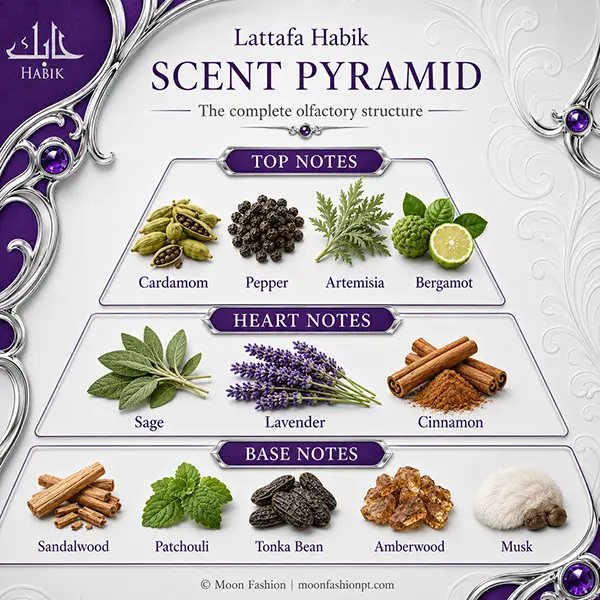
Lattafa Habik for Men is a 100ml Eau de Parfum whose official note structure changes direction without losing continuity. Pepper, cardamom, artemisia and bergamot make the opening feel brisk, spicy and herbal; sage and lavender pull the centre towards an aromatic register while cinnamon keeps warmth in the composition; then sandalwood, patchouli, tonka bean, amberwood and musk create a broader, darker base.
That movement is more informative than any single family label. Habik is not accurately reduced to “a cardamom scent”, “a lavender fragrance” or “a woody perfume”. Each of those ideas is present, but the character comes from the way they connect.
The scent in three movements
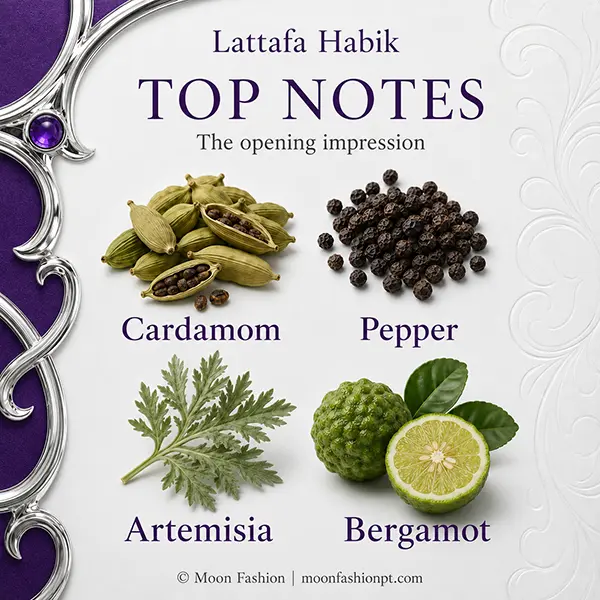
Top Notes: Cardamom, Pepper, Artemisia, Bergamot
The first stage balances warm and dry spice with an herbal edge and a clear flash of citrus brightness.
Why the opening feels more complex than a simple spicy accord
- Cardamom and pepper share the spicy side of the pyramid, but they do not have to perform the same job. Cardamom can read as warmer and more aromatic, while pepper can sharpen the opening and make it feel drier. The official source confirms both notes, not a fixed ranking between them.
- Bergamot is the brightest element in the top-note list. It gives the spices some lift, yet it does not turn Habik into a citrus-centred fragrance: three of the four opening notes sit in spicy or herbal territory.
- Artemisia matters because it introduces an herbal thread before sage and lavender appear. That makes the transition into the middle easier to understand; the perfume can change character while retaining a recognisable aromatic connection.
- For buyers attracted by cardamom, this context is important. Habik does contain cardamom, but it is framed by pepper, artemisia and bergamot rather than presented as a soft, isolated sweet-spice accord.
- The pyramid should not be treated as a stopwatch. The official data identifies the materials assigned to the opening, but it does not state exactly when one fades or which will dominate on every wearer. Describing a fixed minute-by-minute sequence would add precision that the evidence does not support.
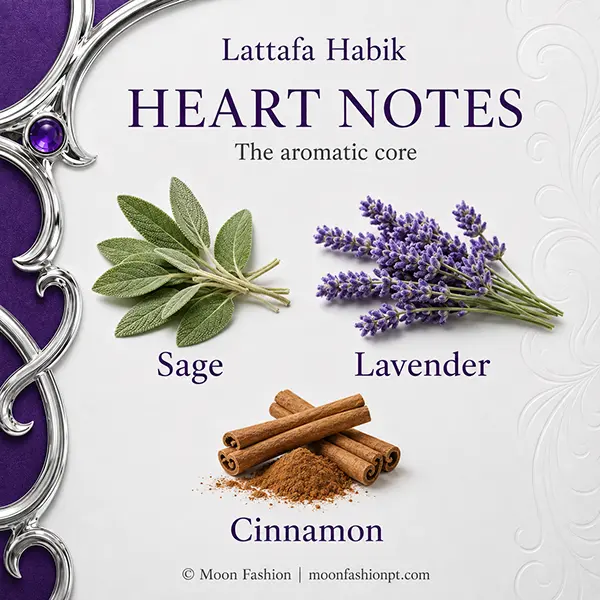
Middle Notes: Sage, Lavender, Cinnamon
Sage and lavender make the centre more aromatic, while cinnamon preserves a warm line between the opening spices and the later woody base.
How the middle changes the mood without breaking the structure
- Sage follows naturally from the herbal side of artemisia. Instead of replacing the opening completely, it develops one of its existing directions and gives the composition a more recognisably aromatic centre.
- Lavender changes the texture of that centre. Beside sage, it can make the middle feel more composed and less angular than the pepper-led opening, although the official source does not specify intensity or dominance.
- Cinnamon keeps the perfume from becoming simply cool or green in the middle. It carries warmth forward and helps prepare the move towards tonka bean, sandalwood and amberwood in the base.
- Cinnamon should not be converted into a gourmand claim. The note is verified; a dessert-like character is not. The safer reading is that it reinforces the warm-spice thread while sage and lavender maintain the aromatic side.
- This three-note centre also explains why specialist descriptions can emphasise Habik's aromatic character. That context is useful, but it should remain separate from an official Lattafa family classification, which the available brand material does not establish.
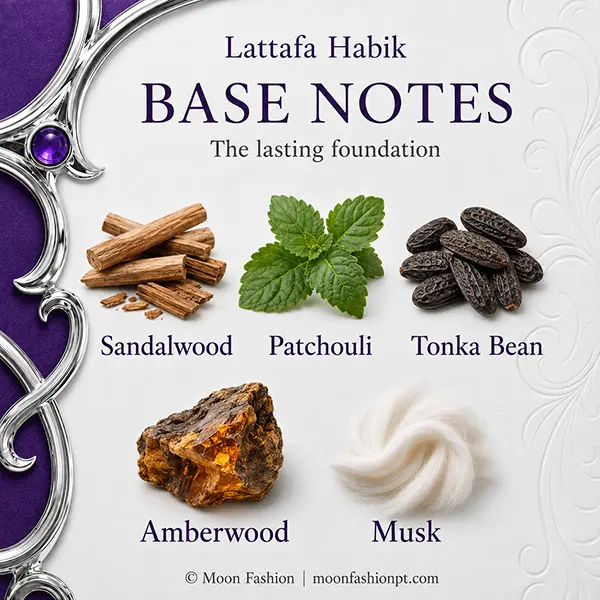
Base Notes: Sandalwood, Patchouli, Tonka Bean, Amberwood, Musk
The dry-down broadens into woods and patchouli, with tonka bean and musk adding softer facets around a base that still retains weight and structure.
What the five-note base tells you before you smell it
- Sandalwood and amberwood provide two separate woody anchors. Grouping them into one generic “wood” would lose useful information, because the official pyramid deliberately lists both alongside patchouli.
- Patchouli adds an earthier, darker counterpoint. Its presence is important when assessing the base because it stops tonka bean and musk from being the only clues to the dry-down's character.
- Tonka bean can contribute warmth and a rounder impression, while musk may soften the finish. These are measured interpretations of the verified notes, not promises about sweetness, texture, projection or longevity.
- Five listed notes do not mean five equal intensities. The brand does not rank the base materials, so it would be misleading to announce one guaranteed dominant note simply because it is popular or familiar.
- The base already contains enough verified material to explain a warmer dry-down. There is no need to invent vanilla, amber resin or other absent notes: sandalwood, patchouli, tonka bean, amberwood and musk are the evidence-controlled foundation.
- For someone who usually separates “woody” from “soft” finishes, this base is worth examining because both tendencies are present in the note structure. Woods and patchouli supply structure; tonka and musk create room for a smoother impression without replacing that framework.
If you enjoy a fragrance that moves from dry spice and herbs into an aromatic centre before settling on a multi-layered woody base, Habik is worth comparing with your usual preferences.
Who may find Habik easier to appreciate?
Habik may appeal most to buyers who enjoy development rather than a scent that stays fixed around one obvious theme. The opening asks whether you like pepper and herbs as much as cardamom; the middle asks whether lavender works for you when it is paired with sage and cinnamon; the base asks whether you want woods and patchouli underneath tonka and musk rather than a purely soft finish.
A preference map built from the actual composition
- If your favourite part of spicy perfumery is cardamom, consider whether pepper and artemisia are also welcome. They make the opening drier and more herbal than the word “cardamom” alone suggests.
- If you normally shop for lavender fragrances, Habik is not a lavender-only proposition. Sage and cinnamon share the entire middle stage, so the aromatic character remains linked to herbs and spice.
- If your priority is the dry-down, the base contains three structural cues before the softer materials are considered: sandalwood, patchouli and amberwood. That may suit buyers who want more depth beneath tonka bean and musk.
- If you are specifically seeking a bright citrus-led fragrance or a simple sweet gourmand, the verified pyramid gives little reason to describe Habik in either of those narrow ways. Bergamot and tonka bean are present, but they are parts of a broader structure.
- These are preference cues rather than guarantees. The purpose is to show which verified relationships are most likely to matter when deciding whether the composition is relevant to your taste.
Family labels help less here than the note architecture
Specialist fragrance sources do not classify Habik in exactly the same way. One places it in a woody-aromatic direction, while another leans towards a spicy-oriental reading. The disagreement is not something to hide: it reflects the fact that the official pyramid contains substantial aromatic, spicy and woody material at different stages.
How to use those classifications without over-reading them
- Artemisia, sage and lavender give a clear reason for an aromatic interpretation, while sandalwood, patchouli and amberwood reinforce the woody side. Cardamom, pepper and cinnamon make a spice-led reading equally understandable.
- Those labels come from specialist interpretation, not from a confirmed official Lattafa family statement. They can help with browsing, but they should not replace the manufacturer's published note structure.
- For Habik, the practical solution is to use the family label as a rough filter and the pyramid as the decision tool. The latter shows why the fragrance may feel different between its opening, middle and base.
- This also prevents SEO language from taking over the page. Repeating several fragrance-family terms would add less information than explaining the specific note relationships that caused those labels in the first place.
- The classifications are also less useful for predicting the order in which Habik changes. A family name cannot show that artemisia appears before sage, that cinnamon sits in the middle rather than the base, or that tonka bean arrives alongside several woods. Those stage relationships are product-specific and therefore more useful than a broad database category.
- If you normally filter by family first, the safest approach is to treat either specialist label as an entry point only. Once Habik is on the shortlist, return to the verified pyramid and decide whether its actual sequence matches the kind of progression you enjoy.
Performance is the part that should remain deliberately non-numerical
Community reports do not support one dependable fixed performance figure. Some wearers describe stronger or longer wear, while others report a lighter result. Habik is verified as Eau de Parfum, but the concentration does not by itself establish a guaranteed number of hours, projection distance or sillage level.
What the mixed wearer feedback is useful for
- The variation tells us that a numerical promise would be less reliable than the official composition. It is therefore better to treat performance as wearer-dependent rather than turn selected reports into a product specification.
- Some community discussion also associates Habik with cooler-weather wear. The spicy opening, cinnamon and woody-tonka base can explain why that preference exists, but no official seasonal instruction has been verified.
- Season guidance is consequently best treated as optional preference context. Someone who enjoys dense spice and woods may reach for the fragrance more readily in cooler conditions, while another wearer may choose it differently. The available evidence does not justify an absolute rule.
- For a purchase decision, the stable facts are more useful: Eau de Parfum concentration, 100ml volume and the official note sequence. Performance comments can add context, but they should not carry more weight than verified product identity.
One final check: make sure the listing is the same Habik
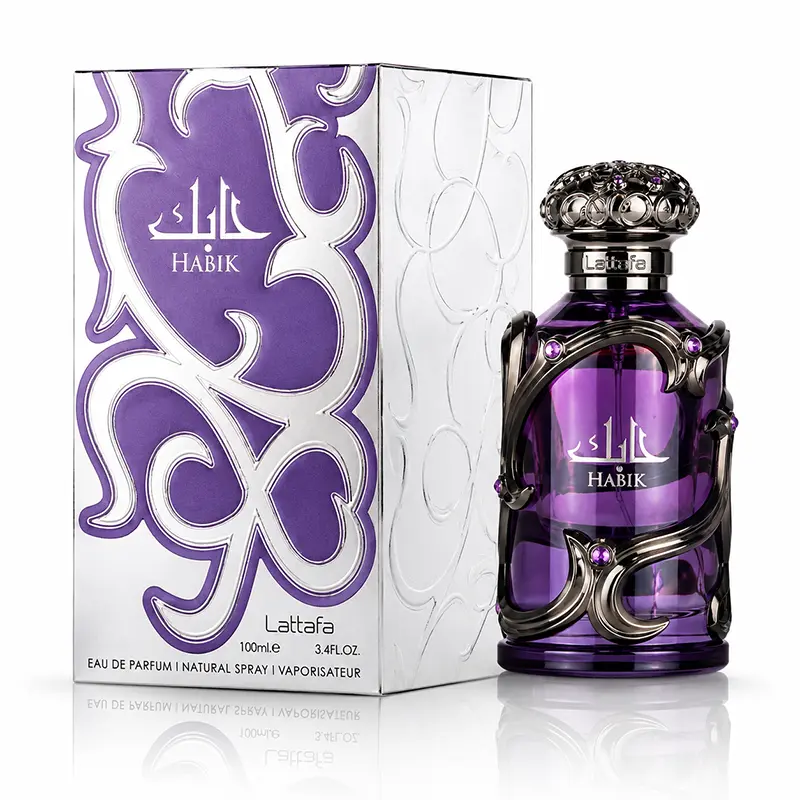
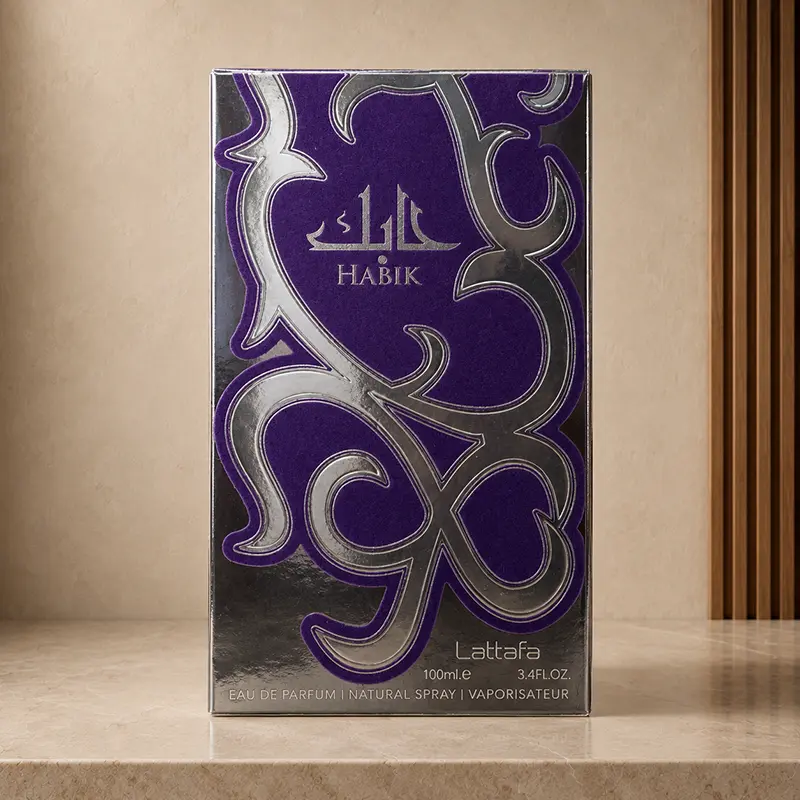
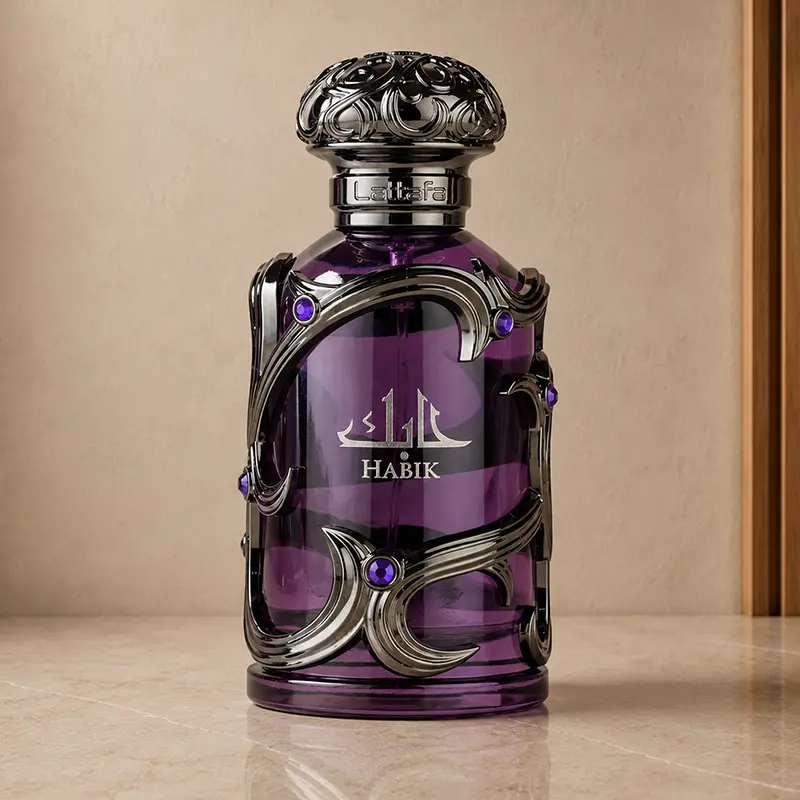
The product in this session is Lattafa Habik for Men, Eau de Parfum, 100ml. Lattafa's regional US page records UPC 6290360598864 for this variant. The global brand page uses “Habik Men”, while the regional page uses “Habik for Men”; both names point to the current men's variant.
Identity details worth checking before ordering
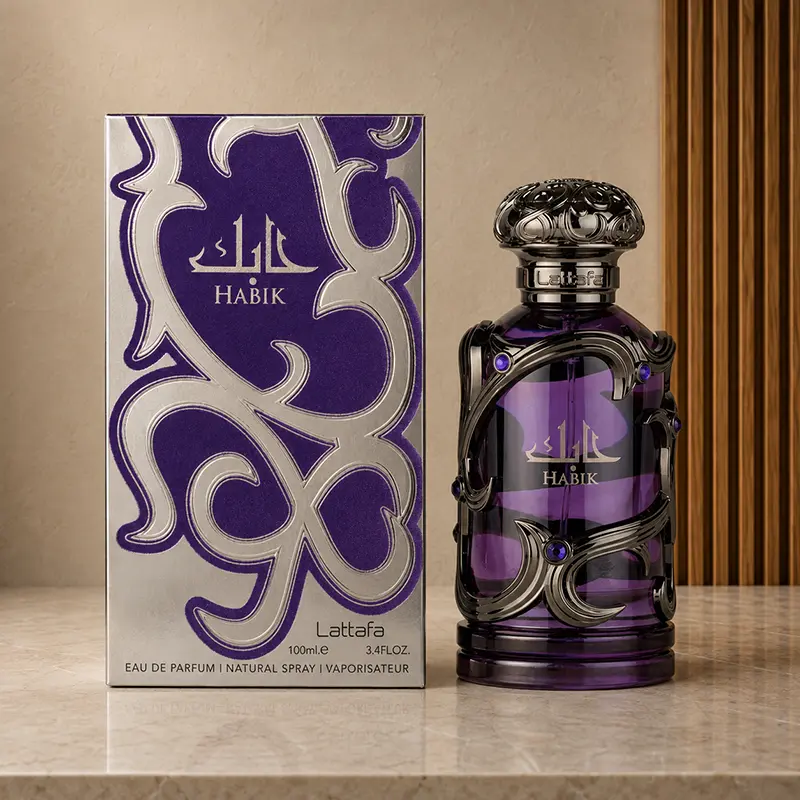
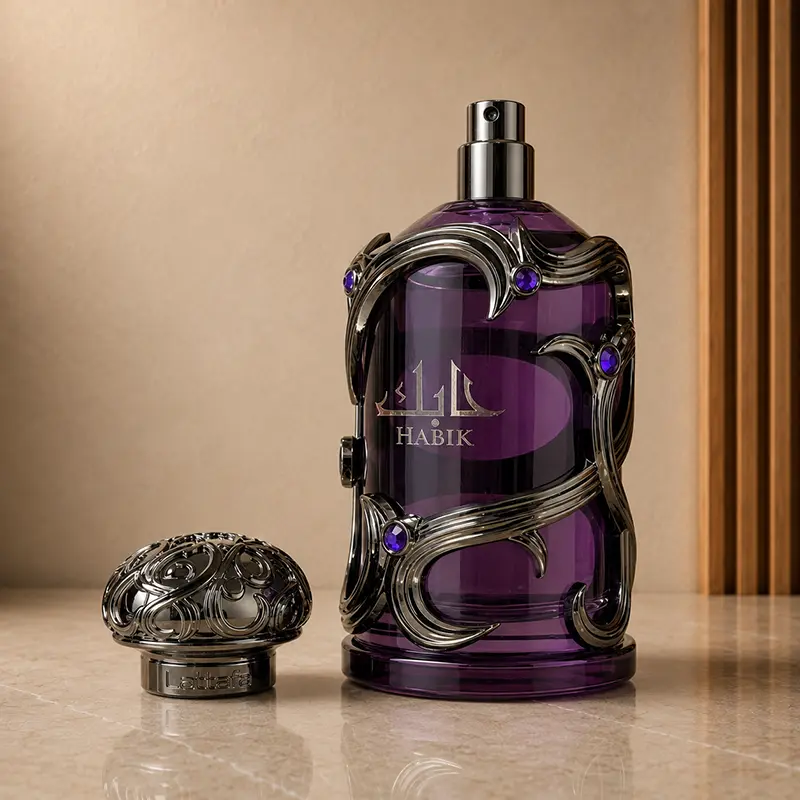
- Match the name, Eau de Parfum concentration and 100ml volume rather than relying only on a purple bottle or similar packaging. Visual resemblance is weaker evidence than exact product identity.
- Compare the note pyramid if a listing presents materially different notes. For this product the verified sequence is Cardamom, Pepper, Artemisia and Bergamot; Sage, Lavender and Cinnamon; then Sandalwood, Patchouli, Tonka Bean, Amberwood and Musk.
- The UPC can support identification, but a barcode is not an authenticity guarantee. It should also not be confused with a retailer SKU or another internal stock code.
- The global brand page contains an inconsistent gender field even though its own title says “Habik Men” and the regional page says “Habik for Men”. That conflict has been retained in the evidence record rather than silently ignored; the resolved working identity for this session is the men's variant.
- Specialist sources agree on a 2025 launch year, but the official product pages reviewed do not state it explicitly. It therefore remains corroborated context rather than a manufacturer-confirmed launch claim.
- The same evidence discipline applies to details that are not verified for this exact SKU. Perfumer attribution, country of origin, the exact manufacturer entity, PAO and EU Responsible Person should not be filled from brand conventions or another Lattafa product. Omitting an unsupported field is more accurate than completing it by association.
- That caution also protects against cross-product contamination. Another Lattafa fragrance may share the same concentration, bottle size or visual language, but none of those similarities authorises transferring its identifiers, legal data, ingredients or origin details into Habik.
Moon Fashion stores in Portugal
- Rua de Fanares 9, Loja 7, 2725-307 Algueirão-Mem Martins, Portugal — open this location in Google Maps.
- Avenida Chaby Pinheiro 18, 2725-264 Algueirão-Mem Martins, Portugal — view the second store location.
- Praceta Laura Alves 7, Loja C, 2725-206 Algueirão-Mem Martins, Portugal — see this address on Google Maps.
- If you are travelling specifically to ask about Habik or a tester, contact Moon Fashion before your visit. Current product and tester availability are dynamic and are not treated here as permanent product facts.
Because the evidence is strongest around identity and composition, those are also the most useful elements to compare across listings. They tell you what Habik is before subjective performance or seasonal preference enters the decision.
Habik makes the strongest case for itself through composition rather than claims: enough spice to give the opening definition, enough aromatic material to change the centre, and enough woody structure to make the base a genuine third stage. That is the useful question to take away—whether that progression matches the way you like a fragrance to develop.






.jpg)