
Aromatic fougère EDT for men with Italian lemon, aromatic herbs and a warm woody base. See more
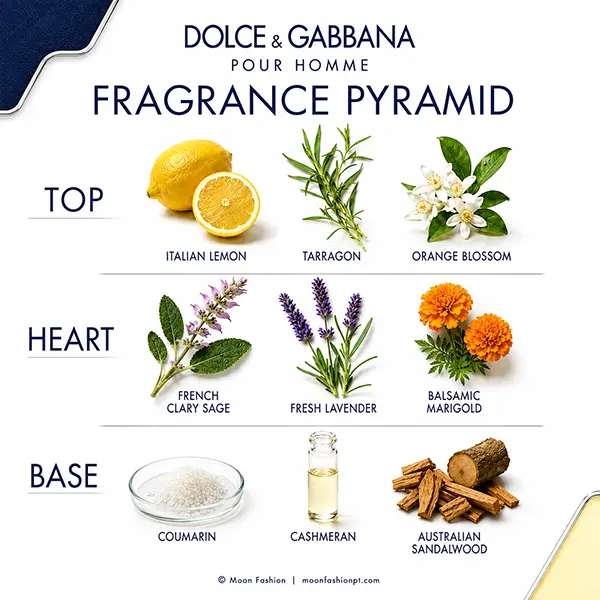
Dolce&Gabbana Pour Homme Eau de Toilette is a men’s aromatic fougère whose current structure moves from Italian lemon, tarragon and orange blossom into French clary sage, lavender and marigold, before settling on coumarin, cashmeran and Australian sandalwood.
Older Pour Homme note lists still circulate online. For the current product, use the note structure shown here rather than combining historical pyramids.
“Fresh” is too broad to explain this composition. Italian lemon gives immediate brightness, but tarragon adds an herbal edge and orange blossom softens that first impression. The heart then shifts the focus towards clary sage, lavender and marigold, while the base brings coumarin, cashmeran and sandalwood into the foreground. Concentration matters because this is specifically an Eau de Toilette, not another Pour Homme format. Size matters because the 75ml, 125ml and 200ml bottles belong to the same fragrance family but carry different EAN/GTIN identifiers. Taken together, those details tell you much more about what you are choosing than a broad adjective or a generic product image.
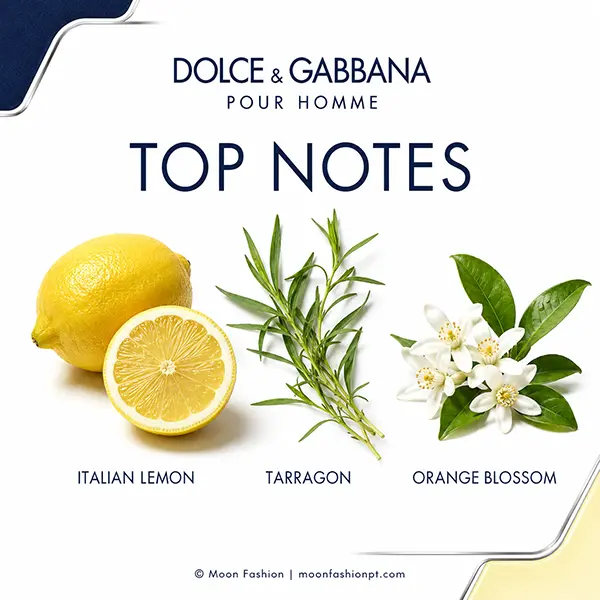
Top Notes: Italian Lemon, Tarragon, Orange Blossom
The opening combines citrus brightness with an aromatic green edge and a softer floral-citrus facet.
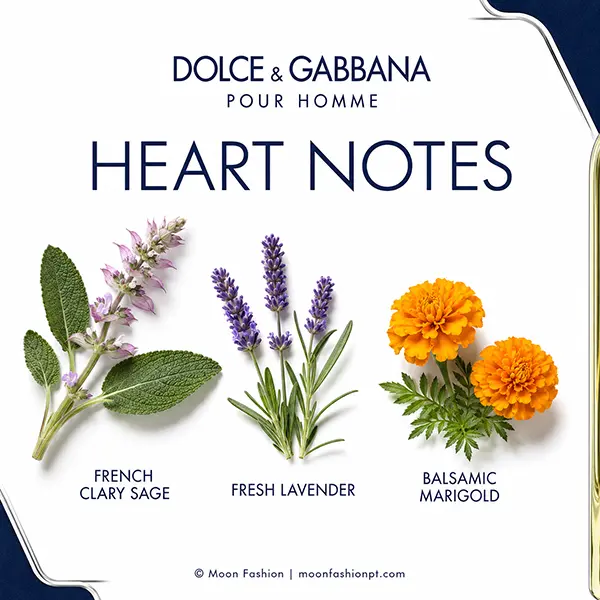
Heart Notes: French Clary Sage, Lavender, Marigold
The middle becomes more herbal and aromatic, with lavender and sage providing the clearest structural change from the opening.
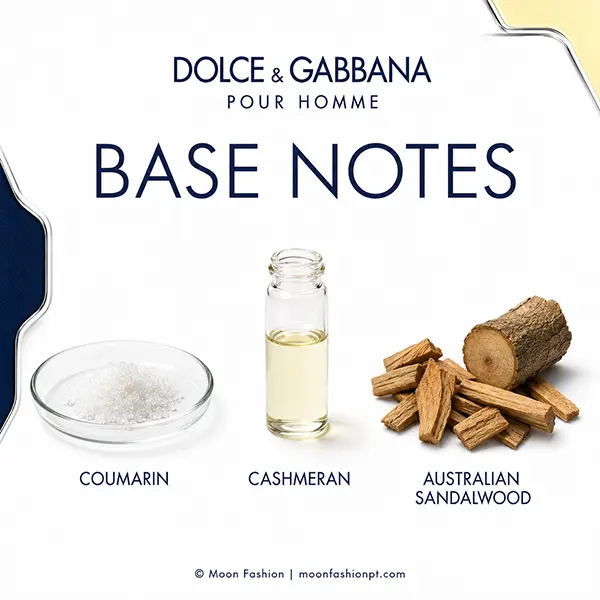
Base Notes: Coumarin, Cashmeran, Australian Sandalwood
The dry-down moves away from the earlier brightness towards a warmer, smoother and more woody finish.
The transition is unusually useful for understanding this fragrance. Tarragon in the opening already points towards the herbal character that becomes stronger in the heart, so the move into clary sage and lavender does not feel disconnected. Orange blossom provides another bridge: it softens the citrus without turning the opening into a sweet floral accord. In the base, coumarin links naturally with the aromatic heart, while cashmeran and Australian sandalwood change the texture rather than simply adding more weight. The result is a composition that evolves through related contrasts: bright versus warm, citrus versus herbal, and airy aromatic facets versus a more settled woody finish.
Tarragon keeps the Italian-lemon opening from reading as a simple citrus accord.
If your preference is for sparkling citrus that remains dominant for most of the wear, Pour Homme deserves a closer look before you decide. The citrus opening is important, but it is not the entire identity. Tarragon points forward to the herbal heart, and the composition soon becomes more aromatic than purely zesty. Conversely, if you like citrus as an entry point but prefer a fragrance to gain herbs, texture and warmth later, this structure may make more sense. The distinction is practical because many product summaries stop at “citrus and fresh herbs”, while the actual note progression shows a more specific relationship between lemon, tarragon, orange blossom and the heart that follows.
Lavender and clary sage define the aromatic centre, with marigold adding a floral-green nuance.
Lavender provides a familiar aromatic backbone, but clary sage makes the heart drier and more herbal. Marigold then brings a less conventional accent, sitting between floral and green impressions rather than acting like a sweet floral centrepiece. That matters because the heart should not be reduced to “lavender”. The three notes work as a group: sage sharpens the aromatic profile, lavender gives it continuity and marigold changes the texture. If lavender is normally a deciding note for you, consider the surrounding herbs as part of the same decision rather than assuming this will behave like a simple lavender fragrance.
Coumarin, cashmeran and Australian sandalwood shift the dry-down into a warmer woody register.
Coumarin can contribute a soft, sweet-toned impression and the brand itself describes it as carrying a vanilla-like echo. That does not make Pour Homme a gourmand fragrance. Cashmeran adds a dry woody-musky texture, while sandalwood supports a smoother woody finish. The important buyer distinction is therefore balance: the base can feel warmer than the opening without becoming a dessert-like composition. If you want a scent that begins with woods or sweetness immediately, this may not be the direction you expect. If you prefer brightness first and a warmer foundation later, the transition is more aligned with that preference.
Older Pour Homme pyramids should not be combined with the current composition.
A listing that presents bergamot, neroli, mandarin, pepper, tobacco, tonka bean or cedar as the principal pyramid is not describing the same current note structure used here. That does not make the older information meaningless; it means the records belong to different published stages of Pour Homme’s history. When comparing shops, look at the complete product name, the Eau de Toilette concentration, the selected volume, the packaging shown and the current notes together. A shared name alone is not enough to justify merging two note pyramids. Keeping those versions separate protects the buyer from an especially common type of perfume-page error: treating historical data as though it were one timeless technical sheet.
Dolce&Gabbana credits perfumer Max Gavarry and frames Pour Homme through citrus, herbs, spices and woods.
Dolce&Gabbana
a bold yet refined composition
The quotation is positioning language, while the note pyramid gives the concrete materials used to describe the scent. “Citrus” becomes Italian lemon; “fresh herbs” can be understood through tarragon and clary sage; the aromatic heart is clarified by lavender and marigold; and the warmer woody direction is explained by cashmeran and Australian sandalwood. Reading both layers together is more informative than repeating the marketing line alone. It also helps keep interpretation proportionate: the brand’s broad descriptors can guide the overall picture, while the named notes define what should and should not be added to a product description.
It may suit buyers who enjoy bright aromatic openings, lavender-and-sage hearts and warmer woody dry-downs.
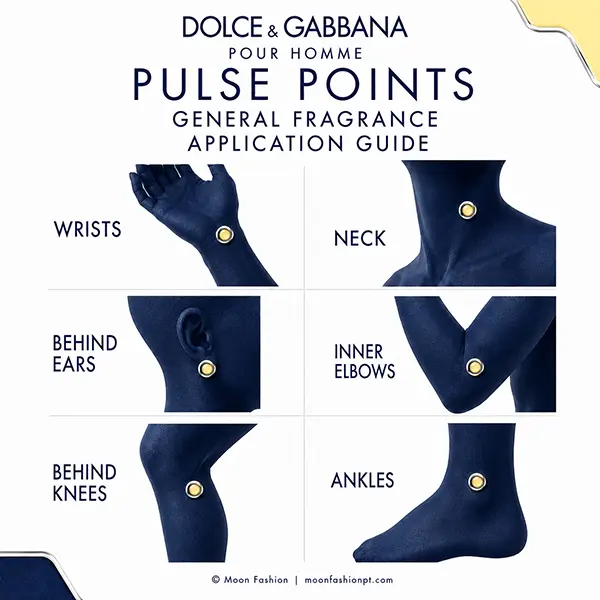
Notes do not behave identically for every wearer. Skin, temperature, application and individual perception can all change which facet feels most prominent. For that reason, the useful guidance here is relational rather than absolute: lemon leads into herbs; the aromatic heart has real weight; and the base becomes warmer and woodier. Those are properties of the published structure. Whether that balance feels formal, relaxed, traditional, modern, light or substantial to you is more personal. If those nuances matter strongly to your purchase, testing the fragrance remains more informative than relying on a single adjective.
The current family includes three verified volumes. The fragrance identity is shared; the commercial variant changes by size.
| Volume | EAN / GTIN |
|---|---|
| 75ml | 8057971180431 |
| 125ml | 8057971180424 |
| 200ml | 8057971180417 |
Retailers often reuse one bottle or box photograph across several size options. Perspective can also make one package look larger or smaller than it is. For that reason, the selected volume should come from the written variant information, not from a visual estimate. The EAN/GTIN can be used as an additional identity reference when comparing listings, but each code belongs to one specific volume and should not be transferred between 75ml, 125ml and 200ml. The note pyramid does not need to be rewritten for each size, because the size distinction is commercial rather than a separate scent profile.
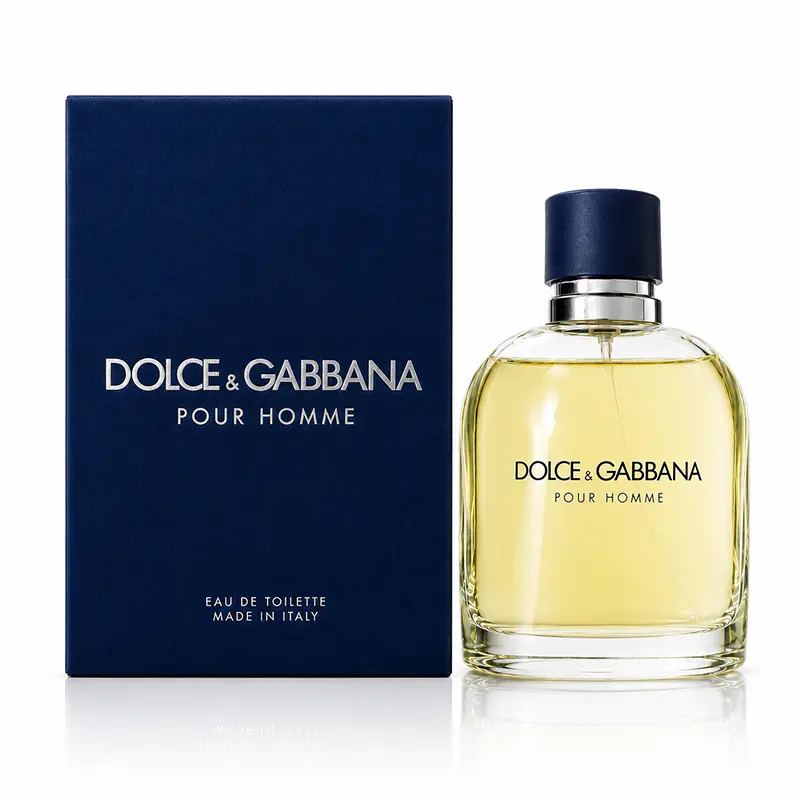
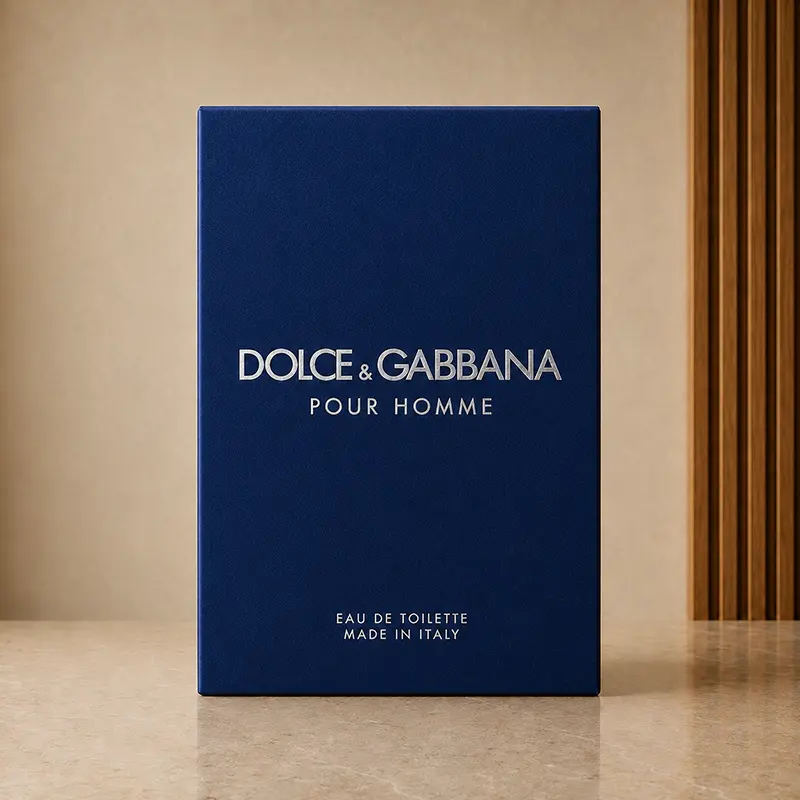
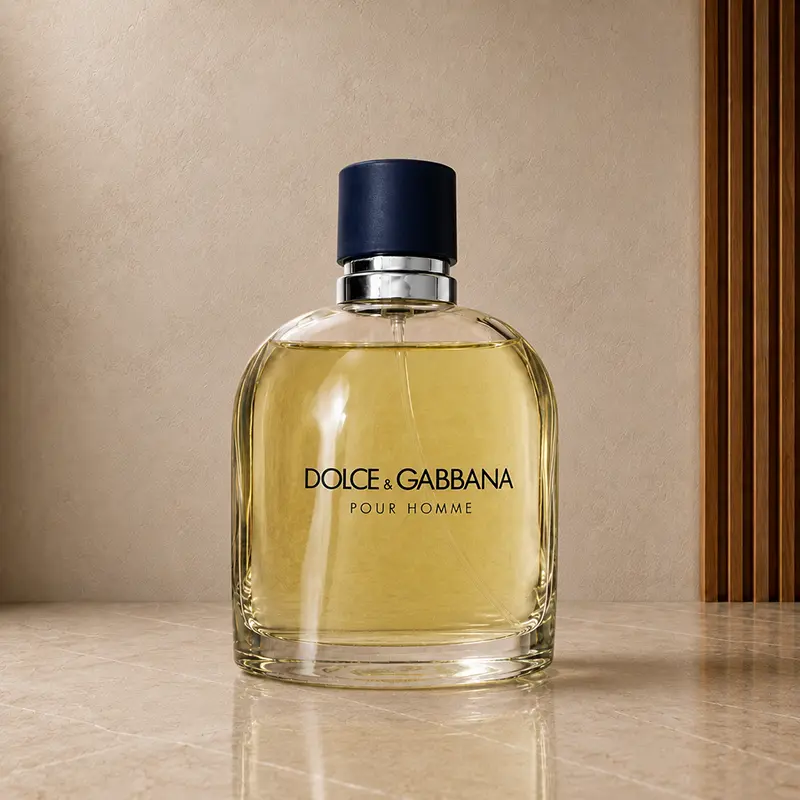
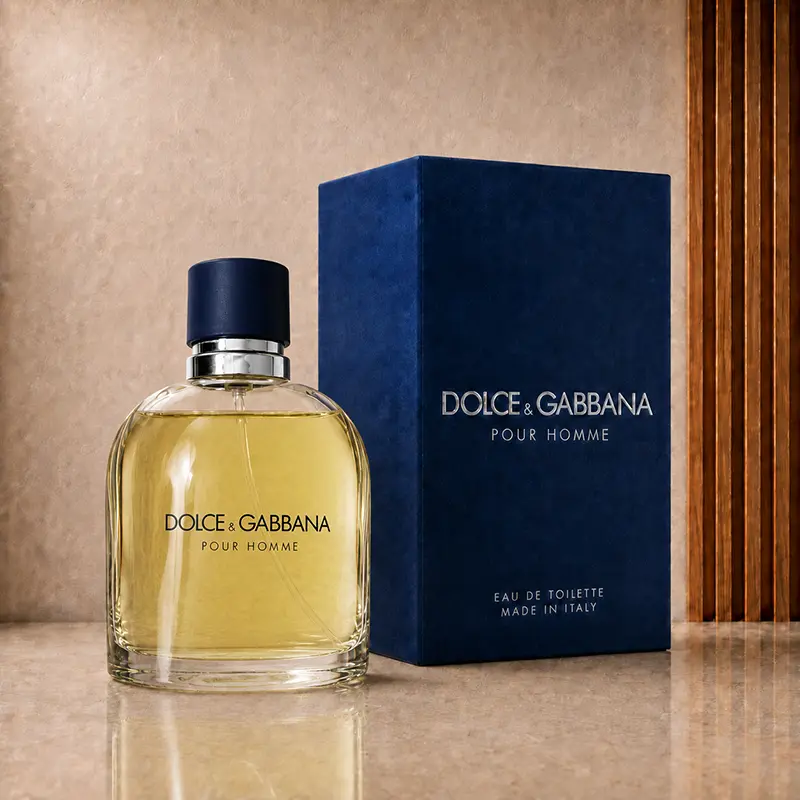
The current presentation uses clear glass, a deep-blue cap and packaging marked Made in Italy
.
Packaging is useful when you are comparing two listings that appear to show different generations of Pour Homme. It can help you notice differences in colour, typography, bottle shape or cap design. It cannot safely tell you the exact volume when the size text is hidden, and it should not be treated as a stand-alone authenticity test. A better check combines the product name, concentration, volume selection, EAN/GTIN and current note structure. That approach is particularly relevant here because Pour Homme has older imagery and older note data still in circulation.
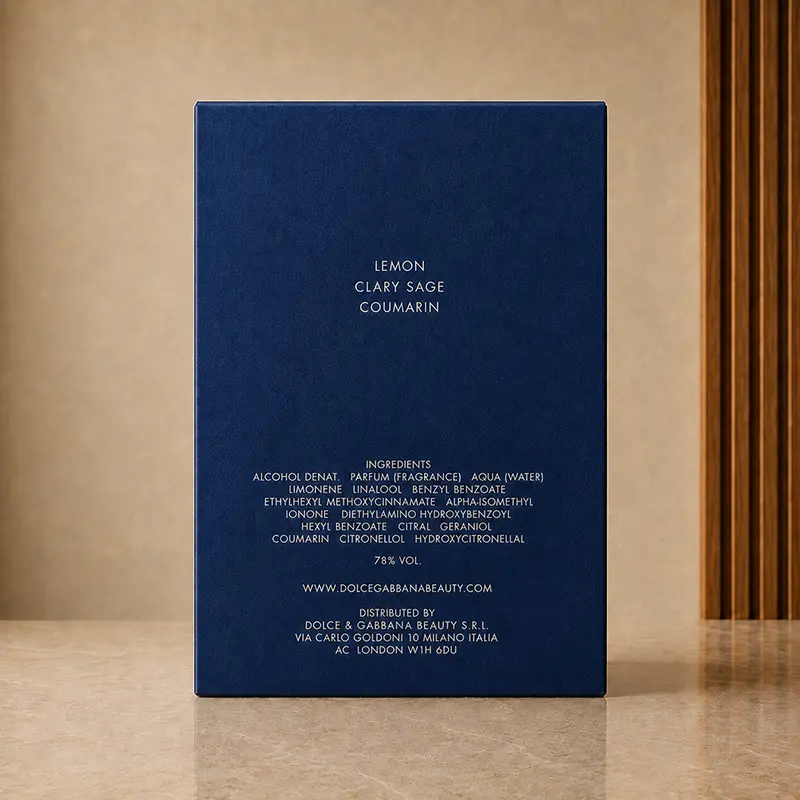
The scent pyramid and the cosmetic ingredients list answer different questions.
If you need to check a particular cosmetic ingredient for personal reasons, read the declaration on the physical package you receive. The brand notes that its ingredient list can be updated, which makes the current packaging the practical reference for that question. A fragrance note is not proof that a material appears under the same name in the ingredients declaration, and the reverse is also true: a listed fragrance-related substance does not automatically become a marketing note. Keeping those two information systems separate prevents a common product-page mistake and gives buyers clearer information about what each list is actually for.
Before checkout, compare the exact name, concentration, volume, identifier and current note pyramid together.
Moon Fashion has three physical showrooms in Portugal; contact the store before travelling specifically for this fragrance or a tester.
Current addresses and visit information are available on the Moon Fashion showroom page. Confirm the specific fragrance or tester before making a dedicated journey.
No. They are separate Dolce&Gabbana fragrances. The shared words “Pour Homme” indicate a male fragrance designation, not one interchangeable product identity. Use the complete name when comparing listings.
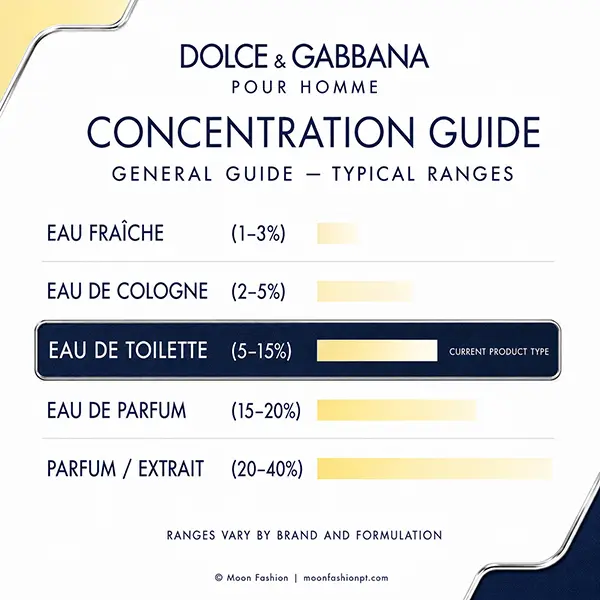
No. Eau de Toilette identifies the concentration category; it does not guarantee a fixed number of hours, projection distance or sillage level. Exact performance can vary between wearers and conditions, so concentration should not be converted into a performance promise.
| Specifications | Descriptions |
|---|---|
| Brand | Dolce&Gabbana |
| Collection / Line | Classic |
| Product Name | Pour Homme Eau de Toilette |
| Product Category | Men's Fragrance |
| Concentration | Eau de Toilette |
| Verified Volume Options | 75ml; 125ml; 200ml |
| Target User | Men |
| Application Type | Spray |
| Variant GTIN / EAN / UPC Mapping | 75ml: 8057971180431; 125ml: 8057971180424; 200ml: 8057971180417 |
| Product Reference Code | VP1785VP1059V000 |
| Country of Origin | Italy |
| Fragrance Family | Fougère Aromatic |
| Main Accords | Citrus, Fresh Herbs, Piquant Spices, Smoky Woods |
| Top Notes | Italian Lemon, Tarragon, Orange Blossom |
| Heart Notes | French Clary Sage, Lavender, Marigold |
| Base Notes | Coumarin, Cashmeran, Australian Sandalwood |
| Ingredients | ALCOHOL, PARFUM (FRAGRANCE), AQUA (WATER), LIMONENE, LINALOOL, BENZYL BENZOATE, ETHYLHEXYL METHOXYCINNAMATE, ALPHA-ISOMETHYL IONONE, DIETHYLAMINO HYDROXYBENZOYL HEXYL BENZOATE, CITRAL, GERANIOL, COUMARIN, HYDROXYCITRONELLAL, CITRONELLOL, BHT |
| Bottle Design | Clear glass bottle with clean contours and a deep-blue cap |
| Packaging Type | Dark blue retail box |


.jpg)