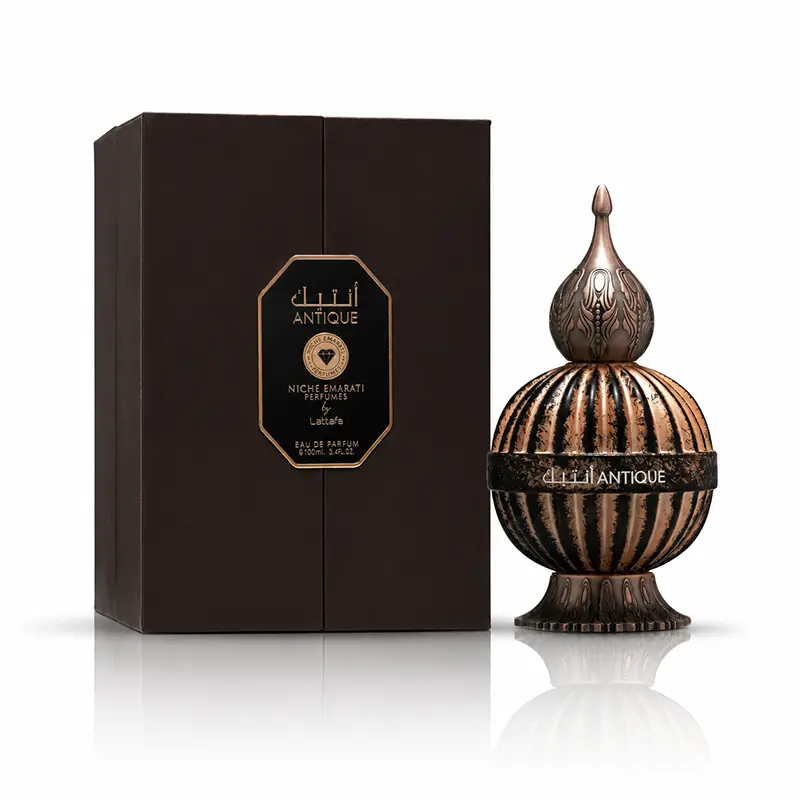
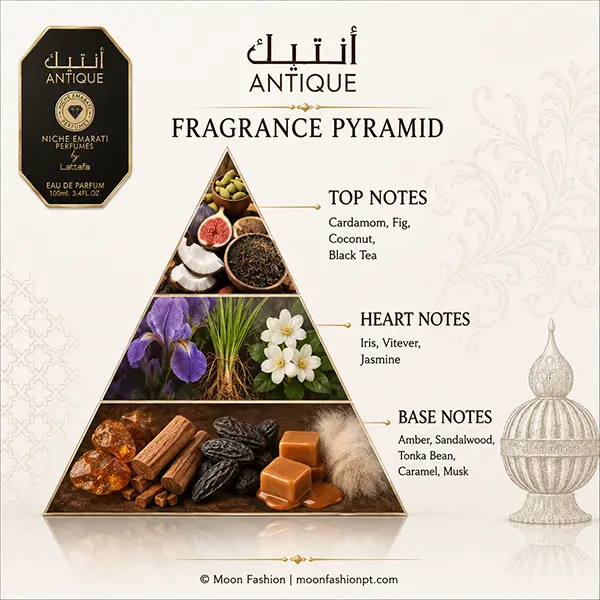
Antique sits in Lattafa’s Niche Emarati collection with a scent structure built around contrast rather than a single dominant sweetness. The opening joins cardamom and black tea with fig and coconut; the centre turns towards iris, vetiver and jasmine; the base then brings amber, sandalwood, tonka bean, caramel and musk. That movement gives the fragrance a recognisable progression from aromatic spice and fruit into a smoother, warmer dry-down.
A composition defined by tension between tea, fruit and warmth
The first impression is useful for understanding Antique because the opening is not simply fruity or gourmand. Cardamom gives the top a dry aromatic lift, while black tea adds a darker, more inflected backdrop. Fig contributes ripe softness and coconut rounds the opening further, so the first stage can feel both textured and approachable rather than sharply fresh.
Top Notes: Cardamom, Fig, Coconut, Black Tea
The opening balances aromatic spice with fruit and a soft coconut facet, with black tea preventing the sweetness from reading as one-dimensional.
How the top notes work together
Cardamom and black tea form the most distinctive structural pairing in the opening. Cardamom can be read as the dry, aromatic edge: it introduces spice without turning the fragrance into a heavy spice blend. Black tea gives the same stage a darker, slightly tannic impression, so the fragrance starts with more contrast than a straightforward fig-and-coconut accord would suggest. Fig then supplies a softer fruit character. It is not presented in the official note list as a syrup, jam or dried-fruit accord, so it is safer to understand it as the fruit element that rounds the aromatic top. Coconut adds another smoothing layer. In this composition, the combination of fig and coconut can make the opening feel creamy to some wearers, but that sensation should not be confused with an official milk note. The current Lattafa note listing for the 100ml product names cardamom, fig, coconut and black tea at the top. That distinction matters for buyers comparing different note lists online. The practical scent picture is therefore a four-way tension: dry aromatic spice, dark tea, soft fruit and coconut. It is this tension, rather than any one note in isolation, that gives Antique its recognisable opening direction.
What community wear reports add — and what they do not
Wearer feedback generally describes Antique as having noticeable presence and persistence, but reports are not uniform. Skin, climate and personal perception can change the experience, so there is no responsible basis for treating a fixed number of hours or a guaranteed projection level as a product specification.
Reading performance feedback realistically
Community ratings around Antique tend to lean positive for both longevity and sillage, and many wearer descriptions mention an opening that is clearly perceptible before the fragrance settles closer to its warmer base. That is useful as context, but it is not the same as a manufacturer-backed performance claim. Individual reports range from strong wear to more moderate experiences, which is exactly why fixed promises such as “eight hours” or “room-filling projection” would be misleading. The note structure itself also helps explain why impressions can vary. Cardamom and tea may feel more prominent in the first phase, while sandalwood, tonka bean, amber, caramel and musk are more likely to shape the later impression. A person who pays most attention to the initial aromatic lift may describe Antique differently from someone who notices the soft, sweet dry-down for longer. Temperature can also alter which side seems dominant. In cooler conditions, users often report enjoying the richer base more readily; in warmth, the sweeter facets may become more noticeable to some wearers. The useful conclusion is not a promised duration, but an expectation of a fragrance with a clear opening-to-base development and community reports that are generally favourable yet variable.
The heart changes the texture rather than repeating the opening
Heart Notes: Iris, Vetiver, Jasmine
The middle introduces powdery floral softness through iris and jasmine while vetiver adds a drier, greener counterweight.
The heart is where Antique becomes less obviously about tea and fruit. Iris can soften the profile and introduce a powdery impression, while jasmine adds floral lift. Vetiver is the useful counterpoint: it prevents the middle from becoming purely plush or sweet and gives the transition towards the base a drier line.
Why iris and vetiver matter in the middle
The heart is important because it changes the way the top notes are perceived rather than simply adding another floral layer. Iris is often associated with a smooth, powdery texture, and in Antique it can be read as the note that makes the transition from fig and coconut feel more polished. Jasmine contributes floral brightness, but the official pyramid does not suggest a dense white-floral composition; it appears alongside iris and vetiver, so its role is better understood as part of a three-note balance. Vetiver brings the sharpest contrast. Its drier, greener character can cut through residual sweetness from the top and prepare the fragrance for a base that contains caramel, tonka bean and amber. That makes the centre particularly relevant for buyers who are trying to judge whether Antique is simply a sweet fragrance. The answer from the structure is more nuanced: sweetness is present, especially later, but the heart introduces enough dry and floral material to keep the development from following a straight line from fruit to caramel. Buyers who enjoy powdery iris with a woody or earthy edge may find this stage especially interesting. Buyers who prefer bright citrus, marine freshness or transparent florals should note that Antique moves in a denser, warmer direction.
Who is likely to respond to this profile?
- Worth considering if: you enjoy black tea or cardamom as part of a warmer composition rather than a fresh aromatic one.
- Potentially appealing if: fig and coconut interest you, but you want a drier middle rather than uninterrupted sweetness.
- May suit you if: iris, sandalwood and tonka bean are notes you tend to enjoy in soft, textured dry-downs.
- Consider carefully if: caramel-heavy bases often feel too sweet to you, because caramel and tonka are both part of Antique’s official base.
- Probably not the obvious choice if: your preference is mainly for citrus, aquatic or very light aromatic perfumes.
How to think about sweetness before buying
Antique contains several notes that can contribute sweetness—fig in the opening, then tonka bean and caramel in the base—but it also contains cardamom, black tea and vetiver, which give the composition drier and more aromatic counterpoints. That means “sweet” alone is too broad a description. The more useful question is what kind of sweetness you enjoy. If you like sweetness framed by tea, spice and wood, Antique’s structure is more relevant than if you are looking for a dessert-like fragrance with no dry contrast. The coconut can make the top feel rounder, but it should not automatically be read as tropical or beach-like; nothing in the verified structure supports that simplification. Likewise, caramel belongs to the base rather than the opening, so the fragrance is designed to move towards that warmer sweetness rather than start there at full intensity. This distinction can matter when sampling. Pay attention to whether the tea-cardamom opening is the part you enjoy most, or whether the later sandalwood-tonka-caramel phase is what holds your interest. Antique’s appeal is in the movement between those two ideas.
Identity details worth checking online
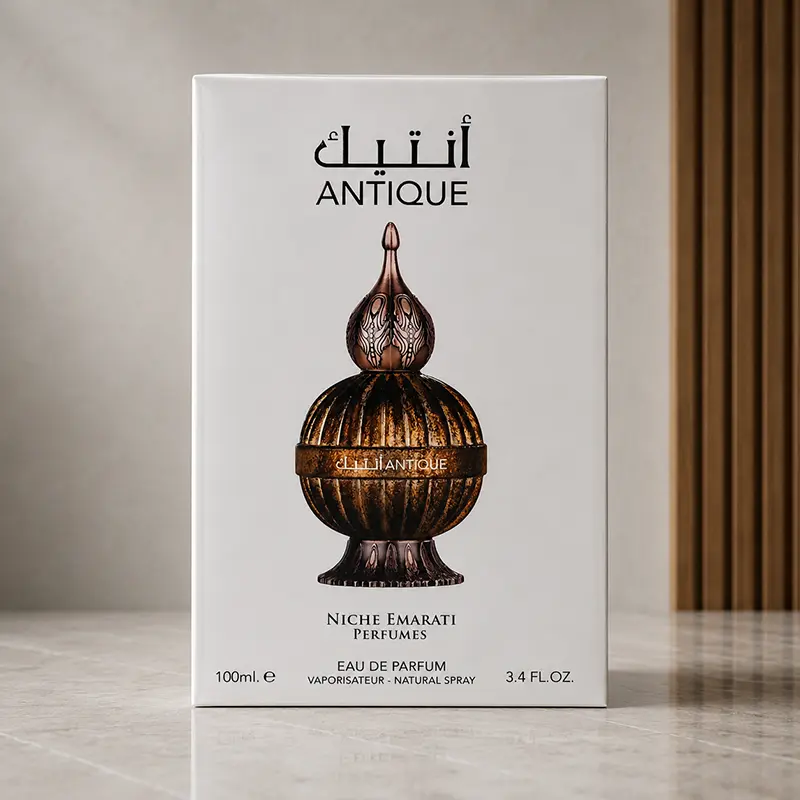
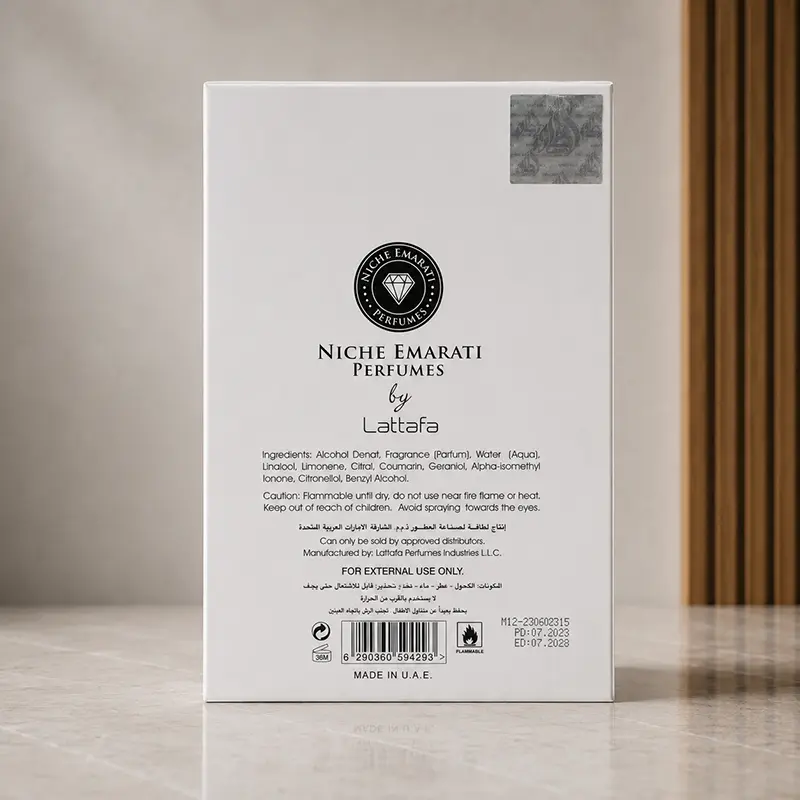
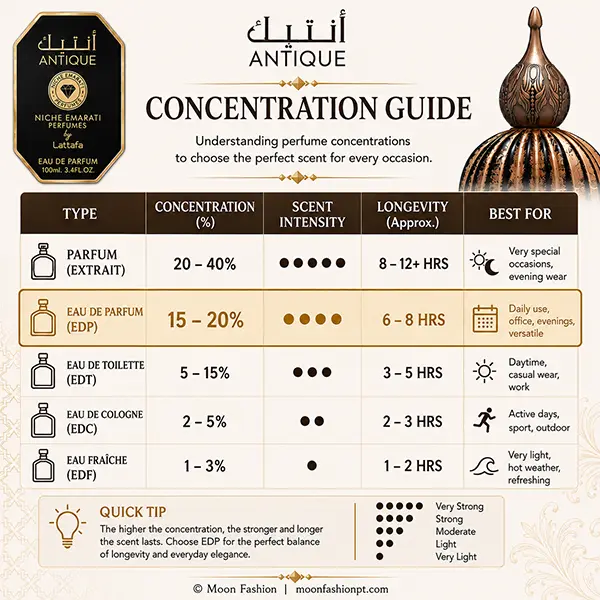
Antique is a 100ml fragrance in Lattafa’s Niche Emarati line, and the 100ml variant is consistently identified as an Eau de Parfum. The exact 100ml variant is also associated with EAN/GTIN 6290360594293. That identifier can help distinguish the listing, but a barcode should never be treated as proof of authenticity on its own.
A note-list discrepancy you may see elsewhere
Some fragrance databases list milk among Antique’s top notes. Lattafa’s current official 100ml Antique page does not. The manufacturer’s page lists cardamom, fig, coconut and black tea at the top, followed by iris, vetiver and jasmine in the heart and amber, sandalwood, tonka bean, caramel and musk in the base. For Moon Fashion, the manufacturer’s current note pyramid controls the product description, so milk is not presented as an official note. This does not mean that a wearer cannot perceive a creamy or lactonic effect. Fig and coconut can create a soft, rounded impression, and the later combination of sandalwood, tonka and caramel can reinforce that sense of creaminess. Sensory impression and stated note are different things. Keeping those two categories separate helps avoid turning community interpretation into product data and also gives buyers a cleaner basis for comparing listings.
The dry-down moves decisively towards woods and soft sweetness
Base Notes: Amber, Sandalwood, Tonka Bean, Caramel, Musk
The base brings the fragrance into a warmer, smoother register, where sandalwood and musk support the sweetness of tonka bean and caramel with amber depth.
This is the stage that makes Antique feel substantially warmer than its tea-led opening might first suggest. Sandalwood provides the main woody body, tonka and caramel add sweetness, amber broadens the warmth and musk gives the composition a softer finish.
What changes from the opening to the base
The shift from black tea and cardamom to sandalwood, tonka bean and caramel is the clearest way to understand Antique’s development. The top has aromatic tension; the base has weight and softness. Sandalwood acts as the bridge because its woody smoothness can connect naturally with the powdery character of iris in the heart. Tonka bean then adds a sweet, warm facet that is more rounded than the earlier fig. Caramel pushes the sweetness further, but because the base also contains amber, sandalwood and musk, the dry-down does not have to read as a single caramel accord. Amber broadens the warm impression and musk softens the edges. This base is likely to matter most for buyers who judge a fragrance by what remains after the opening has faded. If you are attracted primarily to the black-tea opening, it is worth remembering that the later phase is richer and sweeter. If you enjoy warm sandalwood, tonka and amber, the dry-down is likely to be the more relevant part of the composition. That contrast is also why brief first-spray impressions can give an incomplete picture of Antique.
Why cooler conditions are often mentioned
Wearer commentary frequently leans towards cooler or rainy conditions for Antique, and the note structure helps explain that preference without turning it into a rule. Cardamom and black tea can feel particularly clear when the air is cooler, while sandalwood, tonka bean, caramel and amber create a warm base that many people associate with autumnal or winter dressing. At the same time, community reports are not unanimous. Some wearers find Antique adaptable beyond cold weather, including evenings in milder seasons. The safest interpretation is therefore preference-led rather than seasonal prescription. If sweet amber, caramel or tonka feels heavy to you in heat, you may naturally prefer Antique in cooler temperatures. If you are comfortable with richer scents year-round, you may find the same profile more flexible. This is a matter of how the composition behaves for the individual wearer, not an official season classification.
See Moon Fashion’s physical shopping information
For customers who prefer to visit in Portugal, Moon Fashion provides dedicated information about its physical shopping locations. Availability of Antique or a tester should not be assumed before a journey.
Planning a store visit for Antique
Use Moon Fashion’s store information page for the current location details. If Antique itself, or a tester, is the reason for your visit, contact Moon Fashion before travelling to confirm what is available at that time. Product and tester availability are dynamic and are not part of Antique’s permanent product information.
One useful question before choosing Antique
Is Antique mainly a tea fragrance or a sweet woody fragrance?
It is more accurate to think of Antique as a progression between both ideas. The top gives black tea and cardamom a clear role beside fig and coconut, so the first stage has an aromatic, spiced and slightly fruity character. The heart then introduces iris, jasmine and vetiver, adding powdery floral softness and a drier edge. The base changes the emphasis again through sandalwood, tonka bean, caramel, amber and musk. For someone choosing the fragrance online, that means the opening description alone can be misleading. Antique is not only about tea, and it is not only about caramel sweetness. Its identity comes from the transition between those stages. If you prefer the idea of a scent that starts with tea and spice but settles into a warmer, softer woody base, the full structure is more informative than either label on its own.
If this tea-and-spice opening, powdery-dry heart and warm sandalwood-tonka base matches the contrasts you normally enjoy, Antique is worth considering as a 100ml Eau de Parfum within Lattafa’s Niche Emarati line.






.jpg)